There’s something oddly comforting about holding a Pokémon card in your hand. The corners curve just enough to feel soft, the cardstock has this tiny firmness to it, and even the smell of an old binder page can send somebody spiraling back into childhood.
I still remember sliding a scratched-up Charizard into a plastic page and feeling like I had hidden treasure from another planet. Bit dramatic maybe, but honestly, card collectors get it.
The funny thing is, most people collect cards for years without ever thinking about the actual Pokémon card dimensions. They just know when a card “feels right.”
But dimensions matter way more than people realize. Size affects grading, shuffling, sleeve fitting, tournament legality, storage, and even spotting fake cards. A counterfeit card can betray itself by being barely too thin or weirdly narrow. Tiny details. Huge difference.
Whether you’re deep into Pokémon Collecting, building a sweaty little Competitive Deck, or protecting a shiny Holographic Charizard Card like it owes you rent money, understanding the exact measurements can save you from damage, bad purchases, and storage disasters.
So lets dive into the oddly fascinating universe of Pokémon Trading Card Game measurements, materials, protection, and storage.
| Feature | Pokémon Card Dimensions |
|---|---|
| Standard Size | 2.5 × 3.5 inches |
| Size in MM | 63 × 88 mm |
| Pokémon Card Width | 2.5 inches / 63 mm |
| Pokémon Card Height | 3.5 inches / 88 mm |
| Average Thickness | ~0.30 mm |
| Average Weight | ~1.7–1.8 grams |
| Standard Sleeve Size | 66 × 91 mm |
| Toploader Size | 3 × 4 inches |
| Aspect Ratio | 1:1.4 |
| Corner Radius | ~3 mm |
| Jumbo Card Size | Approx. 5.7 × 8 inches |
| Tournament Legal Size | 63 × 88 mm |
| Compatible Games | Magic: The Gathering, KeyForge |
| Smaller Than Pokémon | Yu-Gi-Oh! cards |
What Are the Standard Pokémon Card Dimensions?
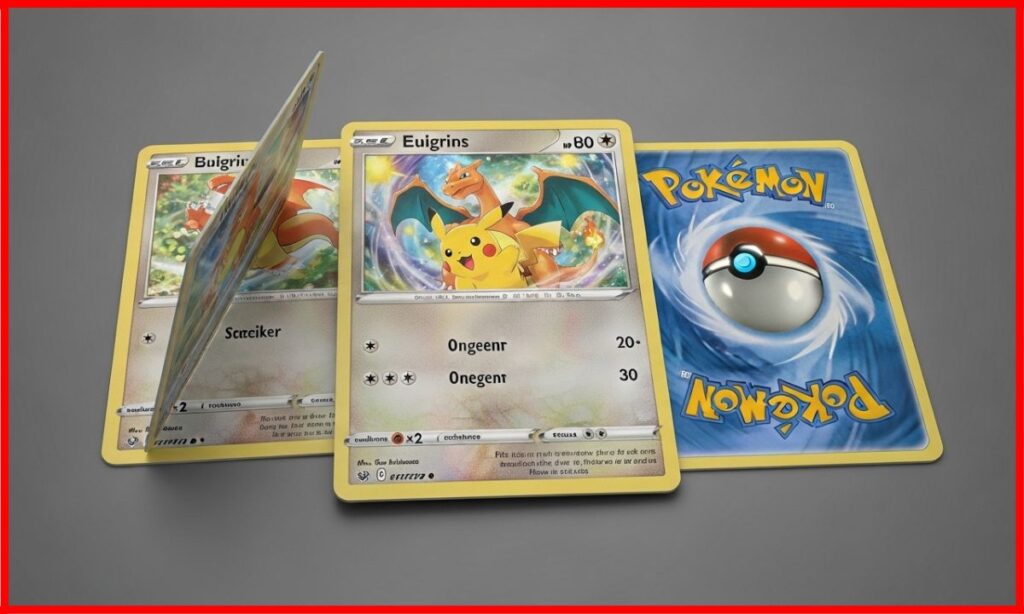
The official standard Pokémon card dimensions are:
- 2.5 inches wide × 3.5 inches tall
- 63 mm × 88 mm
- Aspect ratio of roughly 1:1.4
That measurement applies to almost every regular card released by The Pokémon Company for the modern Pokémon Trading Card Game.
These are considered the industry’s standard trading card size, which is why many accessories overlap with games like Magic: The Gathering.
The moment you hold one next to a tiny Yu-Gi-Oh! card though, you instantly notice the difference. Yu-Gi-Oh cards look like they shrunk in the dryer a lil bit.
Quick Pokémon Card Measurement Table
| Feature | Measurement |
|---|---|
| Pokémon card width | 2.5 inches / 63 mm |
| Pokémon card height | 3.5 inches / 88 mm |
| Pokémon card thickness | Around 0.30 mm |
| Average card weight | About 1.7–1.8 grams |
| Corner radius | Approximately 3 mm |
| Standard sleeve size | 66 mm × 91 mm |
| Toploader size | 3″ × 4″ |
These Pokémon card measurements in inches and mm are essential if you’re buying sleeves, binders, or grading submissions.
Why Pokémon Card Size Matters More Than People Think
You’d assume dimensions are just nerdy technical stuff. But nah, they actually shape the whole experience.
A properly sized card:
- Shuffles smoothly
- Fits inside tournament sleeves
- Slides into binder pages without bending
- Works with grading holders from PSA and Beckett
- Maintains long-term Collector Value
Even a difference of half a millimeter can make a fake card suspicious. Real cards from official printing facilities maintain extremely consistent trading card measurements.
That consistency matters for competitive play too because warped or altered cards can become “marked cards,” which tournaments hate with the passion of a thousand suns.
Pokémon Card Dimensions in Inches and MM
When collectors ask, “what is the exact size of a Pokémon card,” they usually want both metric and imperial measurements.
Here’s the breakdown again in detail:
- Width: 2.5 inches
- Height: 3.5 inches
- Metric size: 63 × 88 mm
- Thickness: roughly 0.30 mm
- Weight: around 1.75 grams
The thickness can vary slightly depending on:
- Print era
- Japanese vs English production
- Foil layering
- Manufacturing batch
Older Base Set cards sometimes feel a touch different compared to modern releases. Some collectors swear vintage cardstock feels denser. Others say modern cards are smoother. Honestly? They both kinda have their own personality.
Pokémon Card Thickness and Materials
A lot of people search “how thick is a Pokémon card” because thickness is one of the easiest ways to identify Counterfeit Pokémon Cards.
Official cards are built from layered Cardstock materials with a dark inner core sandwiched between paper layers. This layered construction helps prevent light from shining directly through.
Real cards usually contain:
- Multiple paper layers
- Ink coating
- Protective finish
- Optional holographic foil layer
For Holographic Pokémon Cards, the Foil Layering changes the texture slightly. You can often feel it under light fingertip pressure, though saying that out loud makes me sound like a card sommelier or something.
Cheap fake cards tend to:
- Feel overly glossy
- Bend too easily
- Have weird thickness
- Weigh incorrectly
- Use low-quality cardstock
Proper Pokémon card construction is surprisingly advanced for something kids used to trade during lunch break while eating crushed chips.
Pokémon Card Size Compared to Other Trading Card Games
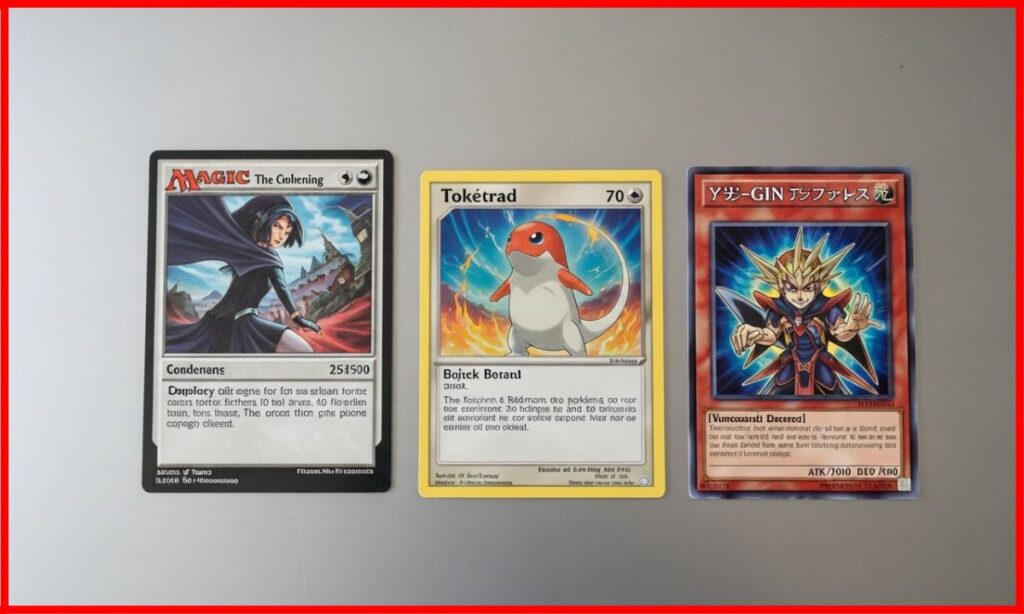
The world of Trading Card Games (TCG) is full of slightly different card formats.
Pokémon vs Magic: The Gathering Card Size
Both Pokémon and Magic: The Gathering use:
- 63 mm × 88 mm dimensions
That means most sleeves and storage accessories work for both. It’s basically the universal TCG size.
Pokémon vs Yu-Gi-Oh Card Size
Yu-Gi-Oh! cards are smaller:
- 59 mm × 86 mm
So Pokémon sleeves won’t fit Yu-Gi-Oh snugly. The cards wiggle around like socks in oversized shoes.
Pokémon vs KeyForge Card Size
KeyForge also uses standard dimensions close to Pokémon cards, though some unique deck components differ.
This compatibility is why accessory brands like Dragon Shield and Ultra Pro dominate across multiple games.
Pokémon Card Sleeve Size Guide
One of the biggest beginner mistakes is buying the wrong sleeves. A sleeve that’s too tight damages corners. Too loose? Cards slide around and get edge wear.
The ideal Pokémon card sleeve size is:
- 66 mm × 91 mm
These provide enough room without excessive movement.
Popular options include:
- Dragon Shield
- Ultra Pro
- Premium Sleeves
- Matte sleeves
- Gloss sleeves
- Tournament sleeves
Best Sleeve Options for Pokémon Cards
Penny Sleeves
Cheap and flexible. Great for basic storage but not amazing for heavy play.
Premium Sleeves
Thicker protection for tournaments and expensive cards.
Double-Sleeved Cards
Collectors often use:
- Inner perfect-fit sleeve
- Outer premium sleeve
This setup gives strong Card Protection against dust, moisture, and accidental drink disasters. Which, lets be real, always happen eventually.
Pokémon Card Protection Essentials
If you own valuable cards like:
- Mewtwo
- Blastoise
- Vintage Charizard
- Rare promos
…you need proper protection immediately. Raw cards sitting loose in drawers age horribly.
Essential Pokémon Card Protection Tools
- Penny Sleeves
- Toploaders
- Deck Boxes
- Binder Pockets
- Side-Loading Pockets
- Magnetic holders
- Storage cases
For high-end cards, collectors usually combine:
- Sleeve
- Toploader
- Team bag or sealed storage
That layered protection prevents:
- Corner whitening
- Surface scratches
- Dust buildup
- Moisture damage
- Warping
Good Card Handling habits matter too. Don’t mash cards onto tables like you’re slapping dominoes in a street tournament.
Pokémon Card Storage Tips
Proper Pokémon card storage can literally preserve thousands of dollars in value.
A friend once kept vintage holos in a garage. Summer heat curled them into tiny cardboard tacos. Horrific scene honestly.
Best Pokémon Card Storage Practices
- Store cards upright
- Avoid humidity
- Use acid-free card storage
- Use PVC-free binder pages
- Keep cards away from sunlight
- Maintain stable temperatures
Serious collectors even use Climate-Controlled Storage rooms.
Recommended Storage Products
- Storage boxes
- Hard cases
- Binder albums
- Side-Loading Pockets
- Waterproof containers
A lot of modern binders now feature padded covers and zipper seals. They look kinda overkill until you drop one accidentally and realize why they exist.
Oversized Pokémon Cards and Jumbo Dimensions

Not every card follows standard sizing.
Oversized Pokémon Cards also called jumbo cards are significantly larger. These often appear in:
- Collection boxes
- Promo sets
- Special anniversary products
Typical jumbo dimensions:
- Around 5.7 × 8 inches
- Can vary by release year
Older jumbo cards were sometimes hilariously gigantic. Modern versions are slightly smaller and easier to store.
Collectors of Pokémon Promotional Cards often seek matching jumbo binders specifically designed for oversized cards.
Pokémon Card Dimensions and Grading Standards
If you’re submitting cards to PSA or Beckett, dimensions become super important.
Professional grading companies examine:
- Size consistency
- Centering
- Surface quality
- Edge wear
- Corner sharpness
- Print alignment
Even tiny measurement irregularities can raise authenticity concerns.
Pokémon Card Grading and Dimensions
Grading services evaluate:
- Pokémon card centering
- Pokémon card surface quality
- Print consistency
- Edge symmetry
A perfect grade can massively increase Collector Value. Especially for:
- Vintage holos
- Trophy cards
- First editions
- Rare promos
People have paid absurd amounts for pristine graded Pokémon cards. Sometimes enough money to buy a car. A decent car too, not even a weird one.
How to Spot Fake Pokémon Cards by Dimensions
One of the easiest methods of fake Pokémon card detection is checking size and thickness.
Signs of Counterfeit Pokémon Cards
- Incorrect dimensions
- Thin cardstock
- Glossy finish
- Weird colors
- Uneven borders
- Incorrect font spacing
- Light passes through too easily
Real cards maintain consistent Pokémon card specifications across production runs.
Counterfeit cards often fail basic measurement checks because fake manufacturers cut corners. Literally and figuratively.
A fake card might be:
- Too narrow
- Too tall
- Too light
- Too flimsy
Using calipers for measurement sounds obsessive until you remember some cards are worth more than rent.
Pokémon Deck Building and Card Dimensions
During Pokémon deck building, uniform dimensions are critical.
Tournament organizers require:
- Sleeves to match
- Cards to shuffle evenly
- No marked cards
If one card bends differently or sticks out slightly, it could create unfair advantages.
Competitive players use:
- Matte sleeves
- Consistent shuffling methods
- High-quality deck boxes
Proper Card Shuffling also reduces edge damage. Mash shuffling is generally safer than riffle shuffling, which absolutely murders card corners over time.
Japanese Pokémon Cards vs English Pokémon Cards
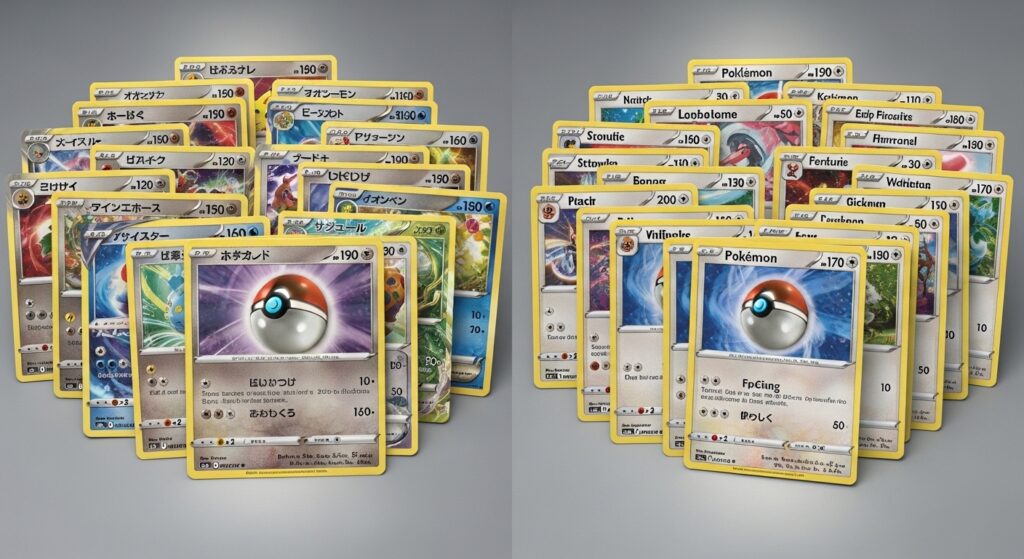
Collectors often notice subtle differences between:
- Japanese Pokémon cards
- English Pokémon cards
The dimensions are generally the same:
- 63 × 88 mm
But differences can appear in:
- Print texture
- Gloss level
- Cardstock feel
- Surface finish
Japanese cards are often praised for:
- Better centering
- Cleaner print quality
- Richer holo effects
English cards tend to have wider print variation. Some collectors weirdly enjoy that unpredictability though.
Pokémon Card Corner Radius and Design Details
One overlooked feature is the Pokémon card corner radius.
Official cards use rounded corners to:
- Prevent sharp edge wear
- Improve shuffling
- Reduce peeling
Fake cards often get the corner cuts wrong. Sometimes too sharp. Sometimes awkwardly rounded like somebody clipped them with craft scissors at 2 AM.
The tactile feel of authentic cards is surprisingly recognizable after enough collecting experience.
Best Accessories for Pokémon Card Protection
If you’re serious about preservation, these accessories are worth considering:
Recommended Pokémon TCG Accessories
- Dragon Shield sleeves
- Ultra Pro binders
- Magnetic one-touch holders
- Toploaders
- Deck cases
- Waterproof storage bins
- Silica gel packets
For expensive cards:
- Use rigid holders
- Avoid overstacking
- Keep away from heat
Some collectors even wear gloves. Thats maybe a little intense for casual cards, but hey, people protect what they love.
Pokémon Card Manufacturing Facts
Most players never think about how cards are made.
Official Pokémon cards involve:
- Precision cardstock cutting
- Layered printing
- Surface coating
- Foil application
- Color calibration
Modern manufacturing aims for strong trading card consistency, though slight imperfections still happen.
Print errors can actually become collectible:
- Misaligned cuts
- Off-center prints
- Missing layers
- Holo bleed
Sometimes mistakes become treasures. Humans are funny like that.
How to Preserve Holographic Pokémon Cards
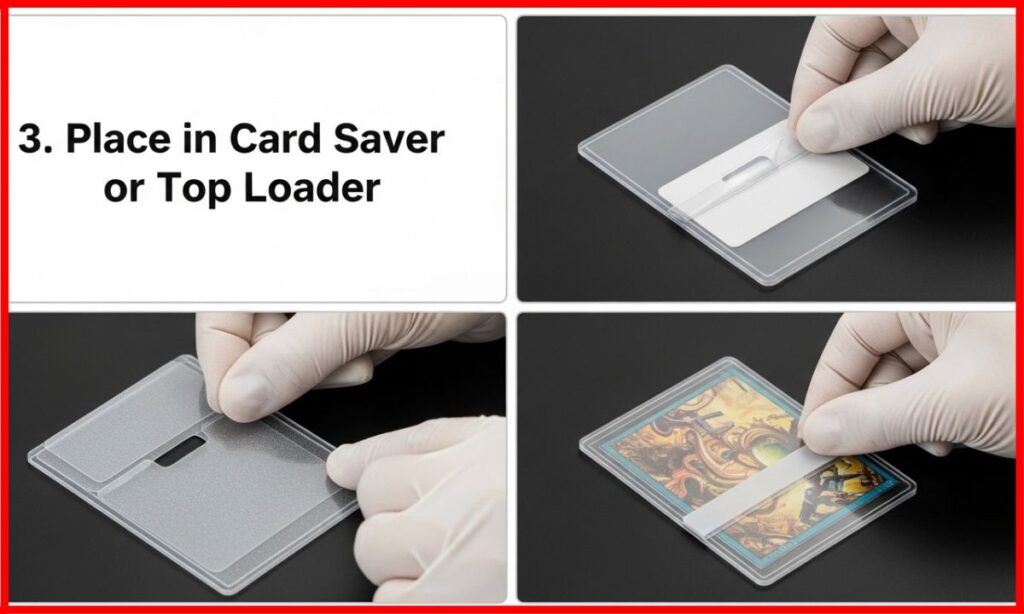
Holo cards are especially vulnerable to:
- Scratches
- Fingerprints
- Surface clouding
Best Preservation Methods
- Sleeve immediately after opening
- Avoid rough binder pages
- Store in low humidity
- Use rigid holders for high-value cards
Collectors chasing pristine condition usually minimize direct handling completely.
Because one accidental fingernail swipe across a holo can feel like emotional damage honestly.
Frequetnly Asked Questions
Are all Pokémon cards the same size?
Most standard cards are 63 × 88 mm, though Oversized Pokémon Cards and some promos differ.
What size sleeves for Pokémon cards?
The best standard sleeve size is usually 66 × 91 mm.
How much does a Pokémon card weigh?
Roughly 1.7–1.8 grams depending on print variations.
What size binder pockets fit Pokémon cards?
Most standard Binder Pockets fit cards sized 63 × 88 mm.
How to protect rare Pokémon cards?
Use sleeves, rigid holders, climate-safe storage, and avoid excessive handling.
pokemon card dimensions
Standard Pokémon card dimensions are 2.5 × 3.5 inches, making them the same size as most trading cards. This universal sizing helps with deck building, storage, and protective sleeves.
pokemon card size mm
In metric measurements, a Pokémon card size is 63.5 mm × 88.9 mm. These exact dimensions are used worldwide for official tournament-legal cards.
pokemon card size
The standard Pokémon card size fits comfortably in the hand and is designed for smooth shuffling during gameplay. Most sleeves, binders, and toploaders are made specifically for this size.
dimensions of pokemon card
The dimensions of Pokémon cards include a width of 2.5 inches, a height of 3.5 inches, and a thickness of about 0.012 inches. Rounded corners also help reduce edge damage over time.
pokemon card aspect ratio
Pokémon cards use a 5:7 aspect ratio, which is the industry standard for many trading card games. This balanced shape improves readability, artwork placement, and handling comfort.
Read Related ARticul: https://marketmetl.com/how-long-is-15-inches/
Final Thoughts on Pokémon Card Dimensions
At first glance, Pokémon card dimensions seem like tiny technical trivia. Just numbers. Width. Height. Thickness. But those little measurements quietly shape the entire collecting world.
They determine how cards shuffle, how they’re graded, how they survive decades, and how collectors preserve memories tied to them. A card isn’t just cardboard really. For some people it’s childhood, competition, nostalgia, community, investment, art sometimes all at once in this weird little rectangle.
Whether you’re organizing binders full of rare holos, building your next Pokémon tournament deck, or simply admiring an old Base Set card that survived years in somebody’s backpack, understanding dimensions helps you protect what matters.
And honestly? There’s something kinda beautiful about millions of people across the world caring deeply about a perfectly measured piece of cardboard with a fire-breathing dragon on it.