There’s something quietly magical about holding a Pokémon Card in your hand. Not loud magic, not fireworks exploding behind a mountain type of magic.
More like the feeling of opening an old drawer and finding a tiny piece of your childhood staring back at you with shiny eyes and bent corners.
Some people see cardboard. Others see a memory from 2001 wrapped in glossy ink and monster energy, honestly it’s kinda beautiful in a weird nerdy way.
I still remember opening my first Pokémon booster pack beside a shop that smelled like cold soda and dust. The card edges felt sharp-new, almost too perfect to touch.
One friend screamed because he pulled a holo card, another kid traded three commons for a single Trainer cards piece because he thought it looked “cooler.”
Nobody cared about investments back then. We just cared about dragons, battles, and whose mum bought the bigger snack after school.
Now though? The world of the Pokémon Trading Card Game has exploded into a gigantic universe of collectors, grading experts, tournament players, and nostalgic adults trying to rebuy the memories they sold for pocket money. Somewhere inside all that excitement sits one surprisingly important question:
How big are Pokémon cards actually?
And funny enough, the answer matters more than people think. Size affects storage, gameplay, sleeves, protection, grading, authenticity checks, and even resale value. A fraction too large or slightly too thin can scream fake card louder than a Charizard on a megaphone.
So grab your binder, maybe a slightly scratched Base Set Charizard if you’re lucky enough to own one, and lets wander through the surprisingly fascinating world of Pokémon card dimensions.
| Pokémon Card Type | Dimensions (Inches) | Dimensions (MM) |
|---|---|---|
| Standard Pokémon Card | 2.5 × 3.5 in | 63 × 88 mm |
| Oversized / Jumbo Pokémon Card | 5.75 × 8 in | 146 × 203 mm |
| Mini Pokémon Card | ~1.7 × 2.4 in | ~43 × 65 mm |
| Pokémon Card Thickness | 0.012 in | 0.30 mm |
| Average Pokémon Card Weight | 0.06 oz | 1.7–1.8 g |
Official Pokémon Card Dimensions Explained
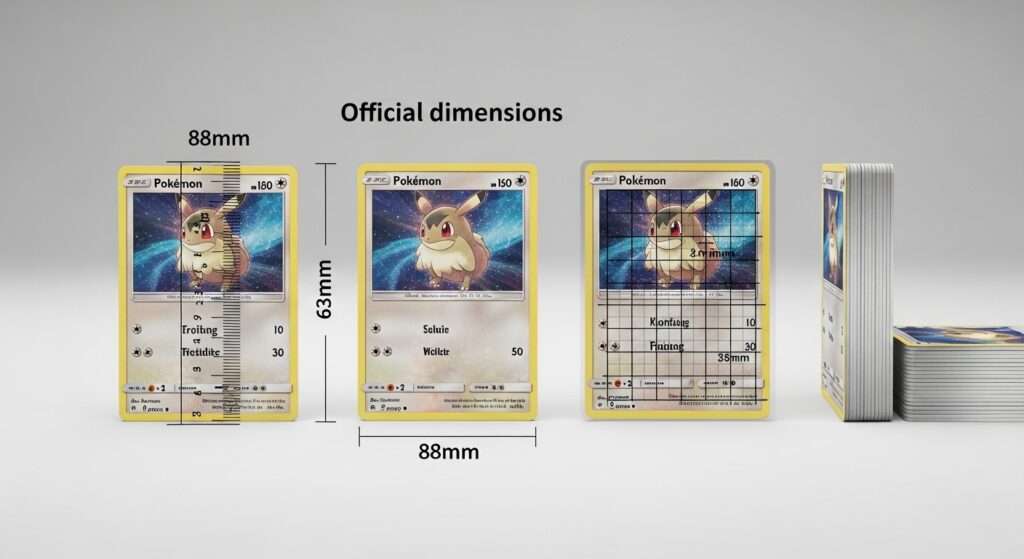
The official Pokémon card size follows the standard trading card format used across many games and collectible industries. A regular Standard Pokémon card measures:
- 2.5 inches x 3.5 inches
- 63 mm x 88 mm
These measurements are considered the universal standard trading card dimensions. It’s the same sizing used by games like Magic: The Gathering and many sports cards too. That’s why collectors often compare them against Baseball card size standards.
When people search for Pokémon card dimensions in inches or Pokémon card dimensions in mm, this is the answer they’re usually hunting for. Tiny rectangle. Massive emotional value. Funny how that works.
The dimensions are carefully designed for comfortable shuffling, fair gameplay, and storage compatibility. Imagine trying to hold a deck with random card sizes during a tournament. Absolute chaos. Cards flying everywhere like startled pigeons.
The official sizing also helps with:
- Deck building
- Pokémon gameplay
- Sleeve compatibility
- Tournament legality
- Binder organization
- Card grading standards
Without consistent sizing, the entire TCG ecosystem would become messy real quick.
Pokémon Card Thickness and Weight Matter More Than You Think
Now here’s where collectors become detectives.
The average Pokémon card thickness is around:
- 0.30 mm
- roughly 0.012 inches thick
Meanwhile, the average Pokémon card weight is approximately:
- 1.7 to 1.8 grams
That may sound extremely tiny and unimportant, but serious collectors use these details constantly for counterfeit detection. Fake cards often feel weirdly flimsy or oddly thick, almost like a restaurant menu pretending to be treasure.
Authentic cards use high-quality official cardstock layered with special printing materials. Real cards flex differently. They reflect light differently too. Experienced collectors can sometimes spot fake cards by sound alone, which honestly feels like wizard behavior.
A collector at one local meetup once told me:
“Fake cards feel dead in your hands.”
And weirdly, he was right.
Pokémon Card Dimensions Compared to Other Trading Cards
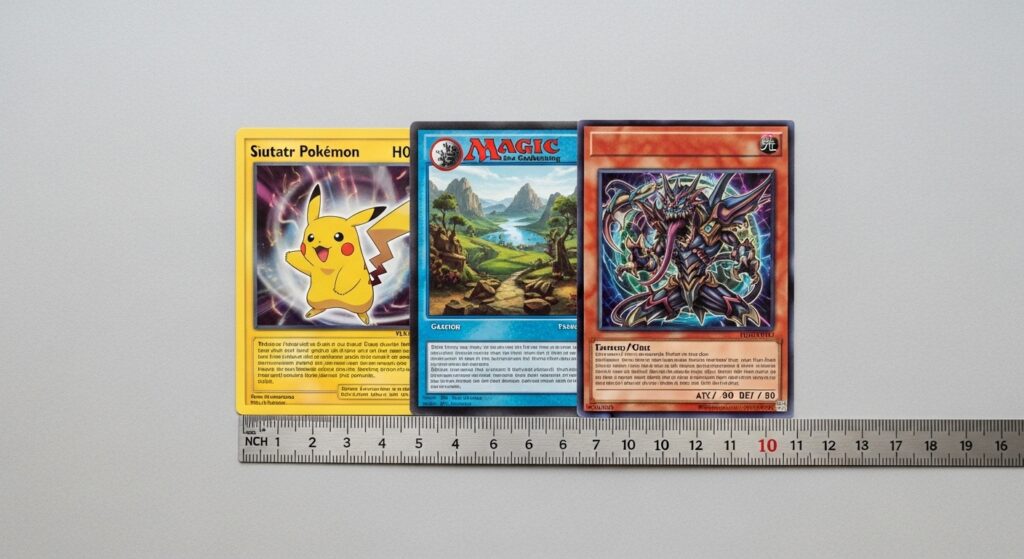
One thing many newcomers ask is how Pokémon compares to other games. The answer? Fairly close.
Pokémon Card Size vs Magic: The Gathering
Both games share nearly identical dimensions:
- 2.5 x 3.5 inches
- Standardized TCG sizing
This makes many trading card sleeves, binders, and storage boxes interchangeable.
Pokémon Card Size vs Yu-Gi-Oh!
Here’s where things change slightly.
Yu-Gi-Oh! cards are smaller:
- approximately 59 mm x 86 mm
That difference may seem tiny, but using the wrong sleeve size creates loose fits and awkward movement inside binders. Nobody wants their rare holo sliding around like butter on a hot pan.
KeyForge and Other TCG Games
Games like KeyForge also use standard sizing similar to Pokémon. The entire Trading Card Game industry kinda revolves around compatible accessories nowadays.
Different Types of Pokémon Card Sizes
Not every card follows the standard format. The Pokémon TCG has released several unique card styles over the years, and collectors absolutely adore them.
Oversized Pokémon Card
An Oversized Pokémon card is larger than normal cards and mostly used for promotional displays or collector items.
Typical dimensions:
- around 5.75 x 8 inches
These are often included in:
- Special Collection Box
- Promo bundles
- Anniversary sets
They look incredible framed on walls honestly. Like miniature gaming posters pretending to be cards.
Jumbo Pokémon Card
The terms Jumbo Pokémon card and oversized card are often used interchangeably. Many Jumbo promo cards feature fan favorites like:
- Charizard
- Pikachu
- Lugia
- Eevee evolutions
Collectors love displaying these in special frames or dedicated jumbo card display shelves.
Mini Pokémon Card
Yes, tiny Pokémon cards exist too.
A Mini Pokémon card is much smaller than standard cards and often created for novelty products, mini binders, or special merchandise collections.
The exact Pokémon mini card dimensions can vary, though they’re usually around half the normal card size.
Small enough to lose instantly in your sofa probably.
Why Pokémon Card Measurements Are So Important
You might think dimensions are only useful for collectors. Nope. They affect almost every aspect of the hobby.
Card Sleeve Compatibility
Buying the wrong sleeves is a rite of passage in this hobby honestly.
The proper Pokémon card sleeve size fits standard 63 x 88 mm cards. Most brands label them as:
- Standard size sleeves
- TCG sleeves
- Gaming card sleeves
Popular options include:
- Penny sleeve
- Premium sleeve
- Matte sleeves
- Textured sleeves
Cheap sleeves protect against dust and fingerprints. Premium ones offer stronger durability and smoother shuffling for tournaments.
Many collectors prefer Polypropylene sleeves because they’re acid-free and safer for long-term storage.
Toploader Protection
A Toploader is a rigid plastic holder used for expensive cards.
If you own:
- a Rare holo card
- a vintage promo
- a Mint-condition collectible
- or maybe a prized Holographic Charizard
…you probably want one immediately.
Toploaders prevent bending, edge wear, and accidental damage. They’re basically tiny armor suits for cardboard dragons.
Binder Pocket Sizing
Your Binder pocket dimensions also matter. Standard trading card binders fit Pokémon cards perfectly because of the shared sizing system.
A quality Pokémon card binder helps with:
- card organization
- visual displays
- condition maintenance
- long-term storage
Some collectors organize by generation. Others by rarity. One guy I met organized his cards alphabetically by Pokémon height which felt mildly unhinged but also impressive.
Dimensions of a Pokémon Card and Storage Solutions
Good storage can literally protect thousands of dollars in value.
That sounds dramatic but it’s true.
Deck Boxes
A proper Deck box keeps active gameplay cards safe during travel and tournaments. Most standard deck boxes hold:
- 60-card decks
- sleeved cards
- dice and markers
Competitive players often carry multiple decks at once for testing strategies and tournament prep.
Cardstock Storage Box
Bulk cards usually go inside a Cardstock storage box. These long white boxes are legendary among collectors.
You’ll see stacks of them in basements, closets, garages, and hobby shops everywhere. Quiet little cardboard coffins full of forgotten commons and accidental treasures.
UV Protection Matters
Sunlight is the enemy of collectible cards.
Long exposure causes:
- fading
- discoloration
- holo damage
- weakened cardstock
That’s why many collectors use storage products with UV protection. Especially for valuable display cards.
Watching a rare vintage card fade in sunlight feels like watching nostalgia slowly evaporate. Hurts a lil honestly.
Dimensions of a Pokémon Card in Competitive Play
In tournaments, standardized dimensions ensure fairness.
Imagine if one player used slightly larger cards. Shuffling becomes easier to track. Card marking issues appear. Competitive integrity gets messy real fast.
Official Pokémon tournaments require:
- authentic cards
- tournament-legal sleeves
- standard sizing
- proper condition
The competitive side of the Pokémon TCG is massive now. Entire communities gather weekly for battles, trades, and strategy discussions.
Inside these TCG communities, dimensions matter because consistency matters.
Pokémon Card Authenticity and Fake Card Spotting
Counterfeit cards are sadly everywhere now.
A fake card might have:
- incorrect dimensions
- wrong thickness
- unusual gloss
- blurry text
- strange coloring
One of the easiest ways to identify Authentic Pokémon cards is checking:
- official measurements
- cardstock quality
- edge cutting
- light reflection
- weight consistency
A genuine card feels balanced in the hand. Fake cards often feel too slippery or too stiff.
Collectors serious about Pokémon card authenticity sometimes even use precision calipers and scales. Which sounds excessive until you realize some cards sell for house-money levels of cash.
Rare Pokémon Cards and Their Value
The connection between size, condition, and value is huge.
A slightly damaged edge can slash the price of rare cards dramatically.
Cards like:
- Base Set Charizard
- trophy promos
- vintage Japanese exclusives
- first edition holo cards
…have sold for unbelievable amounts at Pokémon auctions.
The legendary rare holo Charizard cards remain icons of the entire hobby. Even people who know nothing about Pokémon somehow recognize Charizard. He’s basically the celebrity dragon of cardboard culture.
A pristine graded card becomes more than a game piece. It becomes part of the larger collectible investment culture surrounding gaming memorabilia.
Pokémon Nostalgia Is a Real Thing

There’s a reason adults in suits still buy shiny cardboard monsters.
It’s nostalgia.
Pure, unfiltered, time-traveling nostalgia.
The Pokémon nostalgia effect connects people to:
- childhood friendships
- playground trades
- family memories
- weekend tournaments
- birthday booster packs
One parent at a collector convention said:
“I started buying cards again because my son opened the same Pikachu I had when I was ten.”
That sentence alone kinda explains the entire hobby honestly.
The Pokémon franchise culture has survived decades because it blends gaming, storytelling, artwork, and emotional memory into one oddly powerful package.
Pokémon Artwork and Display Culture
The visual side of the hobby deserves more love than it gets.
Some collectors focus entirely on Pokémon artwork instead of gameplay. They collect specific artists, themes, or card styles.
Modern display methods include:
- wall frames
- acrylic cases
- LED shelves
- graded card stands
- custom binder pages
A beautiful Pokémon card display transforms cards into actual room decor. Tiny museum pieces from a pixelated universe.
And honestly? Some card illustrations are straight-up art.
Pokémon Card Accessories Every Collector Should Know
The accessory world around Pokémon is gigantic now.
Popular tools include:
- Trading card binders
- Trading card sleeves
- deck organizers
- acrylic displays
- portable carrying cases
- sorting trays
Many collectors also use:
- Polyethylene sleeves
- humidity control packs
- premium display cases
- graded slabs
All of this exists for one reason:
premium card preservation
Because condition affects value, beauty, and emotional attachment.
Pokémon Collectors Market Keeps Growing

The global Pokémon collectors market continues expanding every year.
Driven by:
- nostalgia
- online influencers
- auction headlines
- competitive gaming
- social media communities
…Pokémon collecting has become a serious industry.
Still though, beneath the expensive auctions and grading hype, there’s something charmingly innocent hiding inside the hobby.
People still light up when pulling a favorite Pokémon.
That joy hasn’t changed one bit.
Fun Facts About Pokémon Card Dimensions
Here’s a handful of weird little facts collectors enjoy:
- Standard Pokémon cards have stayed mostly consistent in size since the late 1990s.
- Some older cards feel slightly different because cardstock formulas changed over time.
- Oversized promo cards are difficult to sleeve because regular accessories don’t fit them.
- Tournament sleeves are often opaque to prevent card-back visibility issues.
- Certain vintage cards are more valuable if perfectly centered during printing.
- A sealed Elite Trainer Box or ETB can weigh slightly differently depending on promo contents.
- Some collectors keep unopened Booster pack products for decades as investments.
Tiny details become giant obsessions in the collecting world. It’s wonderfully nerdy.
How to Protect Your Pokémon Cards Properly
If you’re serious about keeping cards safe, here’s a simple setup:
- Use Penny sleeve protection first
- Add a Toploader for rare cards
- Store them inside binders or boxes
- Avoid direct sunlight
- Keep moisture away
- Wash hands before handling valuable cards
And please, please don’t rubber-band stacks together.
Every collector has a painful memory involving rubber bands. Every single one.
Frequently Asked Qeustions
how big is a pokemon card
A standard Pokémon card measures 2.5 × 3.5 inches (63.5 × 88.9 mm). It is similar in size to most trading and sports cards used worldwide.
how tall are pokemon cards
Pokémon cards are 3.5 inches tall or 88.9 mm in height. This standard size helps them fit perfectly into sleeves, binders, and deck boxes.
pokemon card art dimensions
The artwork area on a standard Pokémon card is smaller than the full card size, designed to leave room for stats, attacks, and card text. Most modern Pokémon card art fits neatly within the upper framed section of the card.
dimensions of a pokemon card
The official dimensions of a Pokémon card are 2.5 inches wide by 3.5 inches tall, with a thickness of around 0.012 inches (0.305 mm). These measurements are standard across most Pokémon TCG releases.
pokemon card size
The standard Pokémon card size is 2.5 × 3.5 inches, making it compatible with regular TCG sleeves, binders, and protective toploaders.
Read this Blog: https://marketmetl.com/how-big-is-1-5-inches/
Final Thoughts on Pokémon Card Dimensions
At the end of the day, the dimensions of a Pokémon card might seem like a small technical detail. Just numbers on paper. Millimeters. Inches. Measurements nobody thinks about during childhood.
But those dimensions quietly shape the entire hobby.
They determine how cards fit in your hands, how they shuffle during battles, how they rest inside binders, and how they survive for decades as treasured collectibles.
They protect fairness in tournaments, authenticity in auctions, and memories in storage boxes hidden under beds.
A Pokémon Card is never just cardboard really.
It’s nostalgia with corners.
It’s friendship laminated in gloss.
It’s a tiny rectangle carrying stories from childhood all the way into adulthood, somehow without losing its spark.
And honestly, that’s kinda beautiful isn’t it.