The first water bottle I ever paid attention to wasn’t fancy. It was dented, slightly cloudy, and lived in the side pocket of my mother’s bag like a loyal dog.
Every time she reached for it, whether we were waiting for a bus or standing in a long grocery line, I noticed the same thing, though I couldn’t name it back then.
That bottle fit. Fit the bag, fit her hand, fit the moment. Years later, I caught myself asking the strangely specific question many of us now Google without shame: How tall is a water bottle anyway?
It sounds silly at first, but height decides everything. Whether it slides into a car cup holder without a fight, whether it tips over on your desk like it’s had a long day, whether it feels like hydration or a workout just carrying it.
This guide isn’t here to rush you through numbers. It’s here to sit with them, spill a little water, maybe knock a bottle over, and understand why water bottle dimensions quietly matter more than we think.
| Water Bottle Size | Capacity | Typical Height (inches) | Height (cm) |
|---|---|---|---|
| Small water bottle | 8 oz (237 ml) | 5 – 6 in | 12.5 – 15.2 cm |
| Compact bottle | 12 oz (355 ml) | 6.5 – 7 in | 16.5 – 17.8 cm |
| Standard water bottle | 16.9 oz (500 ml) | 8 – 9 in | 20 – 23 cm |
| Medium reusable bottle | 20 oz (591 ml) | 9.5 – 10 in | 24 – 25.5 cm |
| Large water bottle | 24 oz (710 ml) | 10.5 – 11 in | 26.5 – 28 cm |
| Extra-large bottle | 32 oz (950 ml) | 11.5 – 12 in | 29 – 30.5 cm |
| 1 liter bottle | 33.8 oz (1 L) | 12 – 12.5 in | 30.5 – 31.8 cm |
| Very large bottle | 64 oz | 12.5 – 13.5 in | 31.8 – 34.3 cm |
Why Water Bottle Height Even Matters (More Than We Admit)
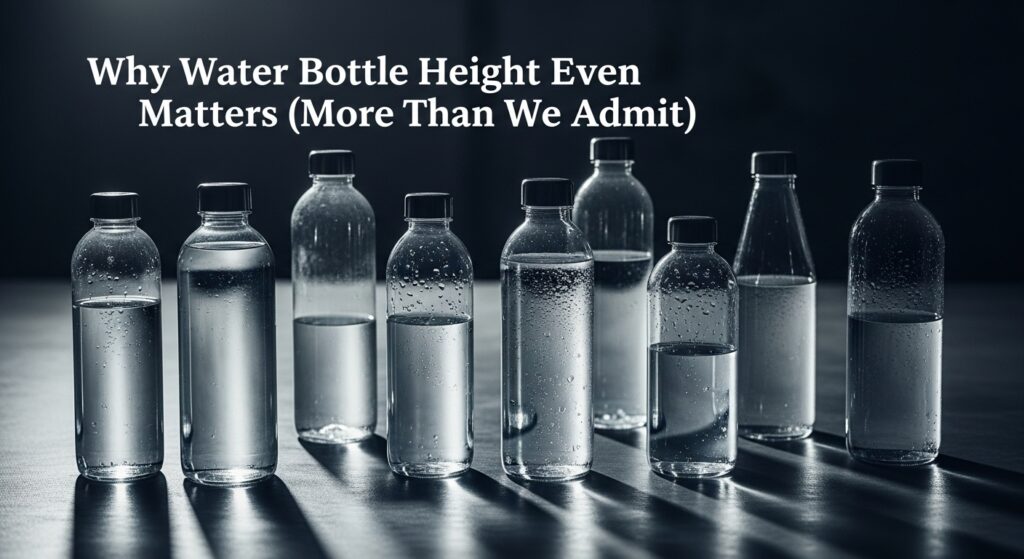
Height is the first impression of a water bottle. Before capacity, before color, before brand flexing. A bottle that’s too tall feels awkward, like wearing shoes half a size too big. One that’s too short sometimes leaves you refilling it every hour, which is charming once, annoying by lunch.
The water bottle height influences portability, usability, and even how much you end up drinking without realizing it. Taller bottles often mean more volume, yes, but they also shift the center of gravity. That affects stability, especially in narrow cup holders or backpack pockets. And don’t get me started on desk spills, those happen fast.
People chasing better hydration habits often overlook this. But a bottle that fits your daily routine quietly supports your daily water intake. It becomes a background habit, which is kinda the goal, right.
Standard Water Bottle Height: The Familiar Middle Ground
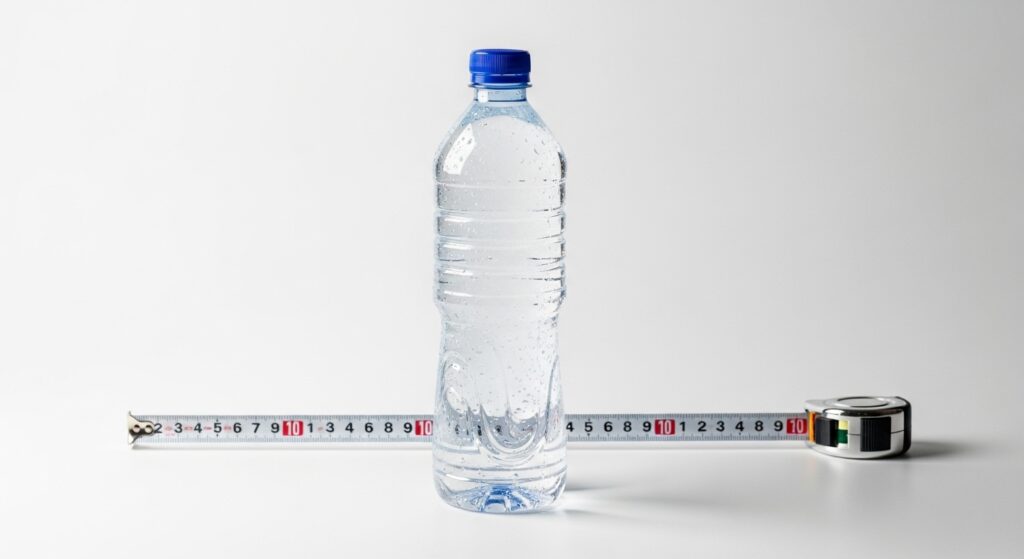
When someone says “regular bottle,” they’re usually picturing a standard water bottle, often a plastic water bottle you’d grab at a store without thinking. These typically hold 16.9 oz (500 ml), also known as the classic 500 ml bottle.
The average water bottle height for this size lands around 8 to 9 inches, or roughly 20 to 23 centimeters (cm). The water bottle diameter usually sits close to 2.5 to 2.7 inches, making it friendly with most cup holders. That’s not an accident. Manufacturing optimization loves predictability.
These bottles weigh very little when empty, often under 20 grams, which is why the empty water bottle weight feels like nothing. Filled, you’re looking at about 1.1 pounds (lbs). Simple, light, disposable. But also, environmentally… complicated.
How Tall Is a Water Bottle in Inches and Centimeters (The Numbers Bit)
Let’s slow-walk the measurements, because rushing numbers makes them blur. Below are common heights you’ll see across standard water bottle sizes.
- 8 oz (237 ml) bottles are usually about 5 to 6 inches tall, short and stout, almost cup-like.
- 12 oz (355 ml) bottles stretch to around 7 inches, still compact but less cute.
- 16.9 oz (500 ml) bottles average 8–9 inches, the everyday hero.
- 20 oz (591 ml) bottles reach roughly 9.5–10 inches, starting to feel tall.
- 24 oz (710 ml) bottles hover near 10.5–11 inches, flirting with awkward in small bags.
- 32 oz (950 ml) bottles often stand 11.5–12 inches tall, very serious about hydration.
- 33.8 oz (1 liter) bottles, also called a 1 liter bottle, land between 11.8–12.5 inches depending on shape.
So if you’re asking how many inches is a water bottle, the honest answer is: it depends, but most live somewhere between 8 and 12 inches. That’s your mental range.
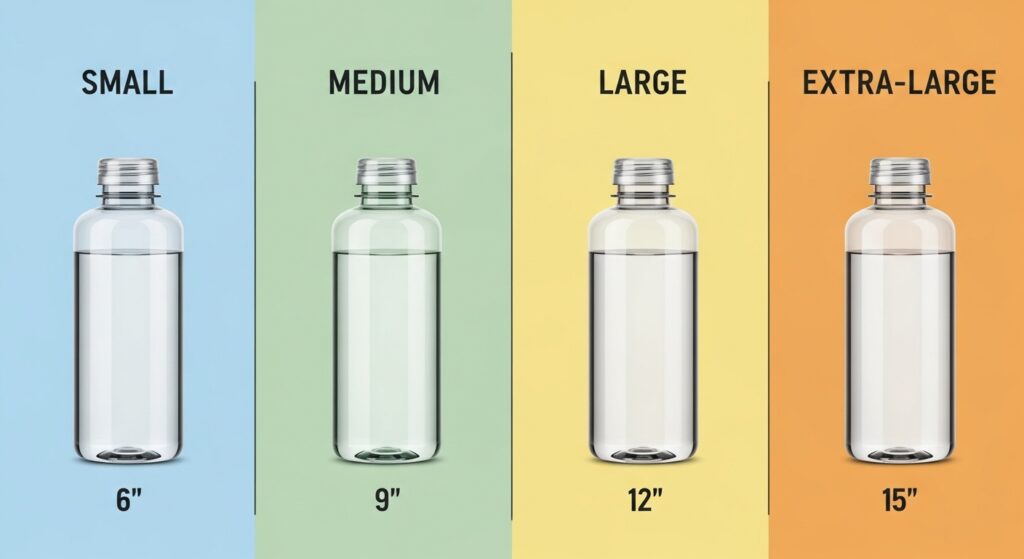
How Tall Is a Water Bottle: Small, Medium, Large, Extra-Large
Small Water Bottles and Quiet Convenience
A small water bottle doesn’t shout. It whispers. Usually under 12 oz, it’s made for quick sips, kids’ lunches, or situations where carrying more feels like too much. Heights range from 5 to 7 inches. These bottles shine in portability, slipping into tiny backpack pockets without complaint.
They’re often used in offices or events, sometimes as disposable water bottles, sometimes as cute reusable ones. Not ideal for all-day hydration, but perfect for light days.
Medium Water Bottles and Everyday Balance
The medium water bottle category is where most adults unknowingly live. From 16.9 oz to 24 oz, heights span 8 to 11 inches. This is where usability peaks for many. They fit most cup holder compatibility standards and don’t feel heavy even when full.
These are popular in gym hydration, daily routines, and commuting. If you’ve ever wondered how many oz is a regular water bottle, this is the range people usually mean.
Large and Extra-Large Bottles: Commitment Pieces
A large water bottle (32 oz) or extra-large water bottle (64 oz, yes that exists) isn’t casual. A 64 oz bottle can reach 12.5–13 inches tall and weigh over 4 lbs when filled. That’s a statement.
Athletes, hikers, and people on extended trips swear by them. They reduce refill frequency, but demand stronger wrists and bigger bags. Backpack pocket fit becomes a real concern here.
Water Bottle Height by Material: Same Size, Different Feel
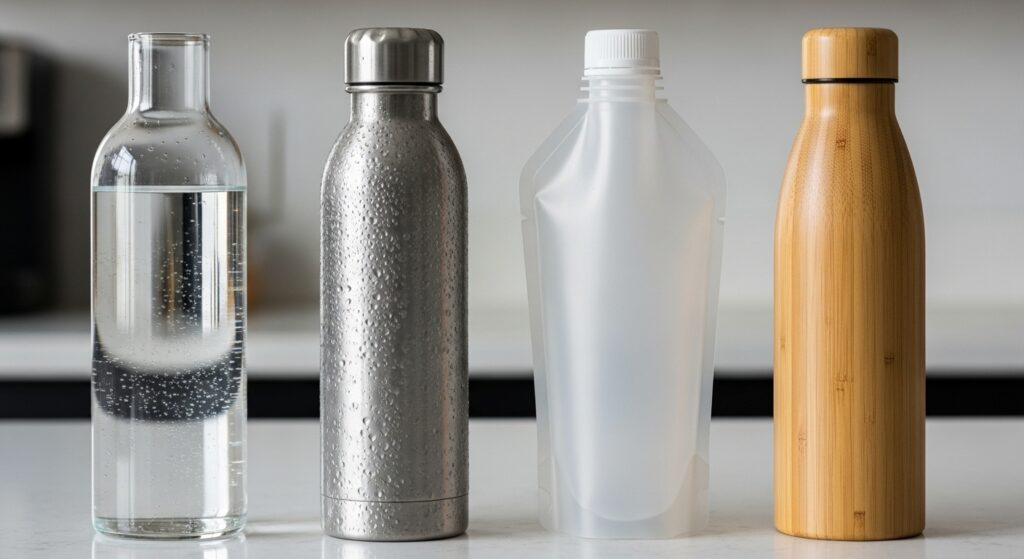
A plastic water bottle often feels taller than it is because it’s light and flexible. A reusable water bottle, especially a stainless steel water bottle, carries visual weight.
Stainless steel bottles tend to be slightly thicker due to insulation, affecting water bottle diameter more than height. A 20 oz stainless bottle might be the same height as plastic, but wider. This can mess with cup holders.
BPA-free plastic bottle designs try to balance lightness with safety. Meanwhile, disposable plastic bottles focus on cost and transport efficiency, not longevity or the environmental impact they leave behind.
Bottle Shape, Cap Size, and the Hidden Height Factor
Height isn’t just the body. The bottle cap size adds sneaky centimeters. Sport caps, flip tops, straw lids, they all stretch the total height. A sport water bottle with a straw lid can be an inch taller than its screw-top cousin.
The bottle shape matters too. Slim profiles feel taller, wider bases feel shorter even at the same height. A wider base improves stability, especially on uneven surfaces, but may sacrifice cup holder compatibility.
People rarely measure caps, yet they’re why bottles don’t fit shelves or fridge doors sometimes. That’s lived experience math.
Water Bottle Size Chart Thinking (Without the Chart)
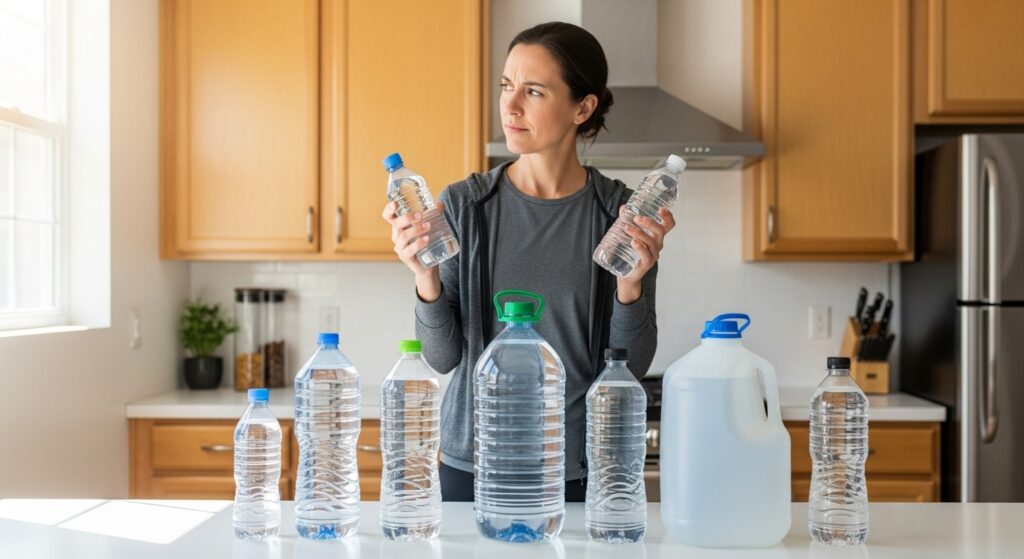
You don’t always need a water bottle size chart or water bottle dimensions table. You need context.
Ask yourself:
- Does this bottle fit my car’s cup holder?
- Will it slide into my backpack without forcing it?
- Can I clean it easily, especially if it’s a wide mouth bottle?
A 500 ml bottle size works for desks. A 1.5 liter bottle or 2 liter bottle belongs more at home or campsites. The infamous 2 liter bottle diameter is wide enough to make carrying it feel like a chore, even though the height isn’t outrageous.
Weight, When Height Turns Heavy
Water bottle weight changes everything. Height amplifies weight. A tall bottle full of water has leverage. That’s physics being rude.
An average bottle weight empty might be 200–400 grams for stainless steel, under 50 grams for plastic. Filled, a 1 liter bottle weighs about 1 kilogram (kg). Carrying that at arm’s length for hours feels different than you expect.
This is why lightweight gear matters to hikers and travelers. Height without weight consideration is incomplete information.
Sustainability, Height, and Daily Choices
Taller bottles often mean fewer refills, which sounds good. But if that bottle is disposable, the environmental sustainability cost adds up. Reduced plastic usage comes from choosing refillable options that match your routine.
A parent once told me, “The bottle you actually carry is the one that saves plastic.” That stuck. Height affects whether you carry it at all.
Recycling helps, but not as much as habits do. A reusable bottle that fits your life beats a theoretically perfect one you leave at home.
How to Choose the Right Height for Your Life
Think less about trends, more about friction. The right height is the one that doesn’t interrupt your day.
- Desk workers usually thrive with 16–20 oz bottles.
- Gym-goers lean toward 24–32 oz.
- Hikers and athletes often need 1 liter or more.
- Travelers benefit from slim, medium-height bottles that fit everywhere.
There’s no moral victory in carrying the biggest bottle. There is joy in finishing one you actually like using.
Read this blog: https://marketmetl.com/pokemon-card-size/
Frequently Asked Qeustions
how many inches is a plastic water bottle
A standard plastic water bottle is usually between 8 to 12 inches tall, depending on its capacity. The most common 16.9 oz (500 ml) plastic bottle is about 8 inches in height.
how many inches tall is a water bottle
Most water bottles measure between 8 and 12 inches tall. Smaller bottles are around 6–8 inches, while larger reusable bottles can reach up to 12 inches.
how big is a water bottle inches
A typical water bottle is about 8 to 11 inches tall with a diameter of 2.5 to 3 inches. The exact size depends on the bottle’s capacity and design.
how tall is a normal water bottle
A normal water bottle, usually 16.9 oz (500 ml), is approximately 8 inches tall. This size is commonly used for single-use plastic bottles.
how many inches is water bottle
Water bottles generally range from 8 to 12 inches in height. Standard everyday bottles are closer to 8–9 inches tall.
Final Thoughts: Measuring More Than Inches
So, how tall is a water bottle? It’s as tall as your habits allow. Inches and millimeters (mm) tell part of the story, but the rest lives in how the bottle moves with you, how it rests, how it reminds you to drink without nagging.
Height is a quiet design decision that shapes hydration, comfort, and even conscience. The next time you pick up a bottle, notice how it fits your hand, your bag, your day. That’s the real measurement.
If you’ve found a bottle height that changed your routine, or one that absolutely didn’t, share it. These small objects carry surprisingly big stories.