If you’ve ever held a Pokémon card in your hands, you probably felt that odd mix of nostalgia and obsession. I mean, these little rectangles are kinda magical, aren’t they?
They’re not just paper with some colorful critters on them—they’re a universe, a collectible, a deck-building obsession that’s been around since 1996, when the Pokémon Trading Card Game (TCG) first debuted.
But before you start flexing your Base Set Charizard at your next tournament, you might be wondering… exactly how big are Pokémon cards? Or, more scientifically,
what are the Pokémon card dimensions that make them the perfect size for shuffling, sleeve protection, and carrying around in your deck box like a tiny treasure chest?
Well, buckle up, because we’re diving deep into the dimensions & physical attributes of Pokémon cards, plus all the related stuff collectors obsess over.
| Category | Dimensions / Details | Notes |
|---|---|---|
| Standard Pokémon Card Size | 2.5 in × 3.5 in (63.5 mm × 88.9 mm) | Most common cards in decks & boosters |
| Card Thickness | 0.012 in / 0.305 mm | Gives ideal shuffle feel |
| Corner Radius | ~0.125 in / ~3.18 mm | Rounded for smooth handling |
| Card Weight | ~1.78 grams | Slightly varies with holo or foil |
| Oversized Pokémon Cards | 5 in × 7 in | Usually promo or display cards |
| Sleeve Size | 2.64 × 3.58 in / 67 × 91 mm | Fits standard cards snugly |
| Toploader Size | 3 × 4 in / 76 × 101 mm | Rigid protection for rare cards |
| Standard Booster Pack Weight | ~20–25 grams | Includes 10–11 cards per pack |
| Elite Trainer Box (ETB) Weight | ~500–600 grams | Full set including sleeves, dice, and promo card |
| Aspect Ratio | 5:7 | Maintains consistent gameplay and deck handling |
The Basics: Standard Pokémon Card Size
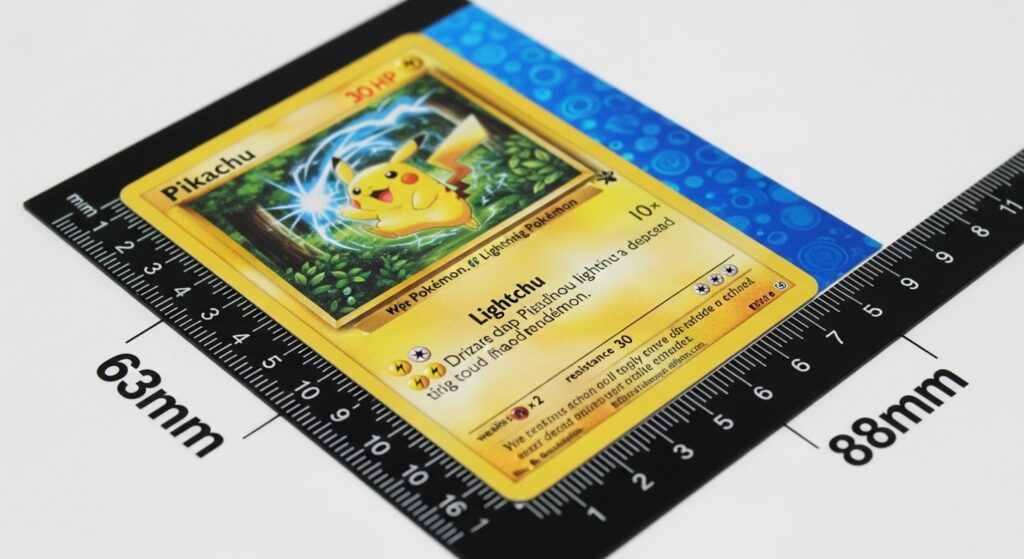
Let’s start with the basics. Most of your everyday Pokémon cards—the ones in your Theme Deck or your favorite Booster pack—follow the standard Pokémon card size. The measurements are pretty consistent globally, thanks to card standardization and the need for gameplay balance.
- Dimensions: 2.5 inches × 3.5 inches (or 63.5 mm × 88.9 mm)
- Card thickness: 0.012 inches / 0.305 mm
- Aspect ratio: 5:7
- Corner radius: ~0.125 inches / ~3.18 mm
- Card weight: ~1.78 grams
So yeah, they’re small, but not too small. They sit perfectly in your hand, ready for shuffling, trading, or showing off that rare Holographic Charizard at your next local meetup. Honestly, holding a standard Pokémon card feels like you’re holding a tiny window into another world.
Pro tip: when you’re buying sleeves or binders, make sure they match these dimensions. Penny sleeves or premium sleeves usually fit snugly, while toploaders give that extra protection if your card is super rare.
Oversized Pokémon Cards: Big, Bold, and Beautiful
Now, if you thought all Pokémon cards were tiny little rectangles, think again. Some oversized Pokémon cards exist, often in Special Collection Boxes or promotional sets, and they’re a whole other vibe.
- Dimensions: 5 inches × 7 inches
- They’re thicker, heavier, and basically perfect for display rather than gameplay.
Collectors often grab these oversized cards for their visual appeal—they’re great for wall displays or to flex at Pokémon card auctions. And yes, the size difference means you’ll need larger protective gear if you wanna keep them mint. A normal sleeve won’t cut it—you need something like a custom binder pocket or a display frame.
Pokémon Card Types: Not All Cards Are Created Equal
When people ask “what are Pokémon card types?” they often just mean Pokémon, Trainer, and Energy cards, but it goes a little deeper than that. Each card type has subtypes, and sometimes even that affects how you store and protect them.
Pokémon Cards
- Basic Pokémon – the ones you start with in your deck
- Evolution Pokémon – the big hitters that evolve from basics
Trainer Cards
- Item cards – single-use helpers
- Supporter cards – one per turn game-changers
- Stadium cards – affect the battlefield, changing the flow of your game
Energy Cards
- Basic Energy – Fire, Water, Grass, Electric, Psychic…
- Special Energy – these add extra effects and can be rare finds
Different card types might have slightly different weights or finishes (like holo vs. non-holo), but their dimensions are generally standardized so your deck still shuffles smoothly.
Pokémon Card Protection: Keep Your Collection Mint
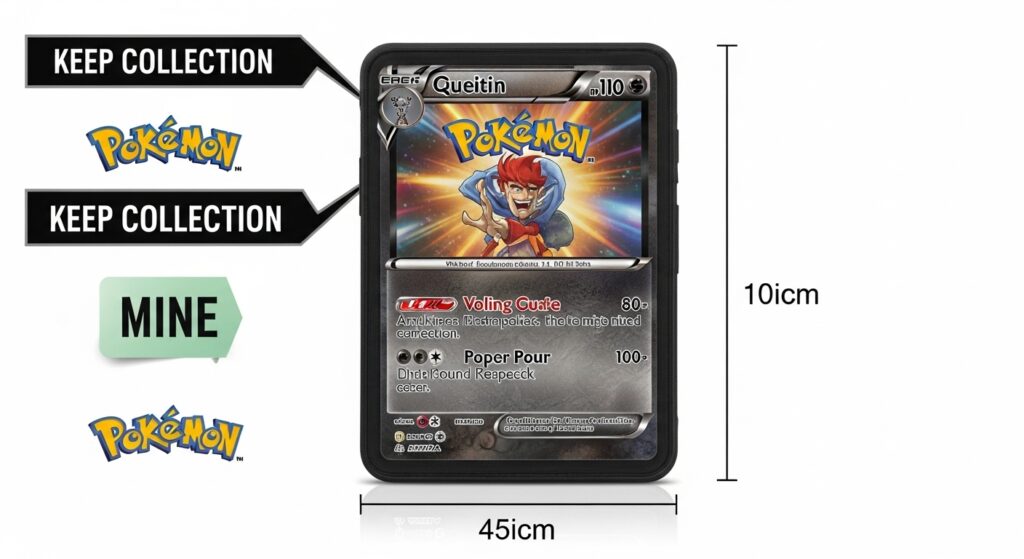
If you’ve ever cried a little over a bent or scratched rare Pokémon card, you already know that Pokémon card protection is basically a lifestyle. There are tons of ways to keep your treasures safe:
- Sleeves: Penny sleeves for casual protection, premium sleeves for serious collectors. Dimensions: 2.64 × 3.58 inches / 67 × 91 mm
- Toploaders: Rigid, hard plastic protection. Size: 3 × 4 inches / 76 × 101 mm
- Binders & binder pockets: Keep your collection organized and easy to flip through
- Deck boxes & Elite Trainer Boxes (ETB): Both storage and portability solutions
Fun fact: using the right sleeves doesn’t just prevent damage—it can actually increase the resale value of your rare Pokémon cards. Seriously, some collectors will pay hundreds just to get a mint condition holographic Charizard.
Pokémon Card Weight & Physical Attributes
So, how much does a Pokémon card actually weigh? The average card is ~1.78 grams, but that can change slightly depending on the print run, special foil effects, or if it’s an oversized card.
Card thickness also matters: 0.012 inches / 0.305 mm isn’t much, but it’s enough to give a satisfying feel when shuffling or doing a deck-building session. And if you’re thinking about stacking hundreds of cards in your binder pockets, those small differences can actually add up!
Comparison With Other Trading Cards
For some perspective, Pokémon cards sit somewhere in the middle of collectible card games:
- Magic: The Gathering cards – slightly smaller than Pokémon cards
- Yu-Gi-Oh! cards – even smaller, more rectangular
- Sports cards – similar size, though thickness may vary
Understanding the dimensions & physical attributes helps when transitioning between different collectible card games (CCG) or investing in storage solutions.
Pokémon Card Measurements in Millimeters
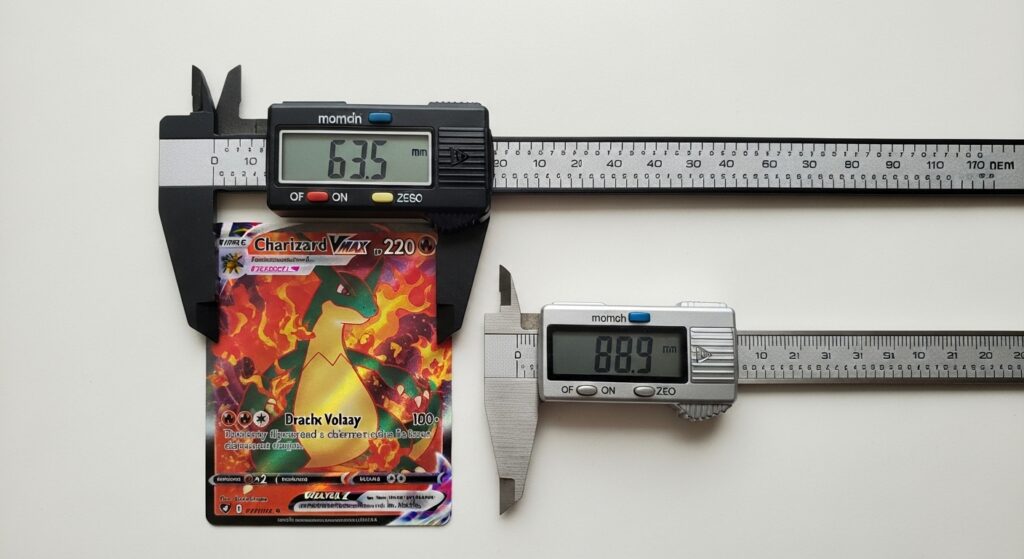
If you’re a precision-obsessed collector, these measurements are gold:
- Standard Pokémon card: 63.5 mm × 88.9 mm
- Corner radius: ~3.18 mm
- Sleeve size: 67 × 91 mm
- Toploader: 76 × 101 mm
Knowing these numbers ensures you never buy the wrong protective accessories. Plus, if you’re doing some DIY custom card displays, precise dimensions are everything.
Deck Building & Card Handling Tips
It’s not just about card size—how you handle and shuffle your cards matters too. A card that’s too worn or bent can ruin a perfect shuffle. Here are a few tips:
- Always use sleeves, especially for rare cards
- Don’t overstuff binder pockets; it can bend edges
- Store in a cool, dry place to prevent warping
- Use toploaders for ultra-rare or oversized Pokémon cards
One veteran collector told me once: “A mint card isn’t just a card—it’s your legacy. Handle it like it’s gold, cuz someday, maybe it literally is.” And honestly, that stuck with me.
Rare Pokémon Cards & Investment Potential
Speaking of legacy, some cards are worth way more than just nostalgia. Think Base Set Charizard, Holographic Charizard, or promotional Special Collection Box exclusives. Knowing the dimensions, weight, and proper protection of these cards is critical if you ever wanna sell or auction them.
- Standard booster pack weight: varies, usually around 20-25 grams
- Heavy booster pack: might include extra foils
- Elite Trainer Box weight: varies, usually 500–600 grams fully packed
- Special collection box weight: heavier, includes oversized promos
Investing in authentic Pokémon cards is easier when you know what to look for: correct dimensions, proper cardstock, and authentic TCG card types.
Read this Blog: https://marketmetl.com/card-pokemon-size/
Pokémon Card Collecting Communities
One of the coolest things about knowing Pokémon card dimensions and types? It instantly plugs you into a global collector community. Local meetups, online forums, tournaments, and even casual trades at Pokémon TCG debut anniversary events. The obsession isn’t just about the cards—it’s about shared knowledge, nostalgia, and thrill of the hunt.
Frequently Asked Questions
How big are Pokémon cards?
Pokémon cards have a standard size of 2.5 × 3.5 inches (63.5 × 88.9 mm), which has remained consistent since 1996.
What are the dimensions of oversized Pokémon cards?
Oversized Pokémon cards are typically 5 × 7 inches and are often used for promotional or special edition purposes.
What types of Pokémon cards exist in the TCG?
The main types are Pokémon cards, Trainer cards, and Energy cards, with Pokémon further divided into Basic and Evolution cards.
How should I protect my Pokémon cards?
Use penny or premium sleeves, toploaders, or binder pockets made of polyethylene or polypropylene to prevent bending, moisture, and dust damage.
How much does a standard Pokémon card weigh?
A typical Pokémon card weighs around 1.78 grams, similar to a small coin or a paperclip, which helps collectors identify fakes.
Conclusion: More Than Just a Card
In the end, a Pokémon card is more than just a piece of cardboard. It’s history, art, gameplay, and investment, all rolled into one. Knowing the Pokémon card dimensions, types, protection methods, and handling tips ensures you treat them right and enjoy them fully. Whether you’re a casual player, a competitive deck builder, or a serious collector hunting for a rare Holographic Charizard, understanding these facts is key.
So next time you pick up a card, take a second to appreciate it: the exact 2.5 inches × 3.5 inches, the 1.78 grams of paper and magic, and all the effort that went into making it. Store it right, play smart, and enjoy the ever-growing world of the Pokémon Trading Card Game.