I still remember the first time I held a stack of trading cards edges a lil bent, corners slightly chewed like they’d lived a life already.
It wasn’t about the size back then, honestly, it was about the weight of them… not in grams, but in meaning. Funny thing is, years later, one of the most common questions in the card collecting hobby is still: how big is a trading card anyway?
And yeah, it sounds like a simple thing. But it’s not just about inches or centimeters. It’s about how these tiny rectangles (or squares… or oddly shaped things)
fit into stories, binders, childhoods, and sometimes even investments that make grown adults argue over cardboard like it’s gold.
So if you’ve ever wondered about Trading Card Sizes, or maybe you’re knee-deep in Collectibles and want to understand what you’re holding, this guide is for you.
We’ll go beyond the boring measurements and kinda wander into the personality of cards their shapes, their weird cousins, and why size actually matters more than people admit.
Trading Card Size Guide (Quick Table)
| Card Type | Dimensions (inches) | Description / Use Case |
|---|---|---|
| Standard Trading Cards | 2.5 x 3.5 | Most common size; used by Topps, Panini, Upper Deck, Pokémon, sports cards |
| Mini Cards | < 2.5 x 3.5 | Smaller novelty cards; harder to store, collectible appeal |
| Smallest Cards | ~1 x 1.5 | Ultra-mini collectibles; rare and niche |
| Square Cards | 2.5 x 2.5 | Unique design; equal sides for creative layouts |
| Tallboy Cards | 3.5 x 5.75 | Taller format; vintage-style or special editions |
| Oversized Cards | 3.5 x 5 to 8 x 10 | Large display cards; promos or inserts |
| Jumbo Cards | Up to 5 x 7+ | Extra-large collectibles; often box toppers |
| Panoramic Cards | ~3.75 x 8 | Wide format; great for team or action shots |
| Booklet Cards | Varies (folded) | Opens like a book; premium collectibles |
| Die-cut Cards | Custom sizes | Unique shapes; not standard rectangular |
| Patch Cards | Usually standard size | Include fabric pieces; thicker than normal |
| Panel Cards | Multi-card layout | Connected cards forming one large image |
The Standard Trading Card Sizes (Where It All Begins)
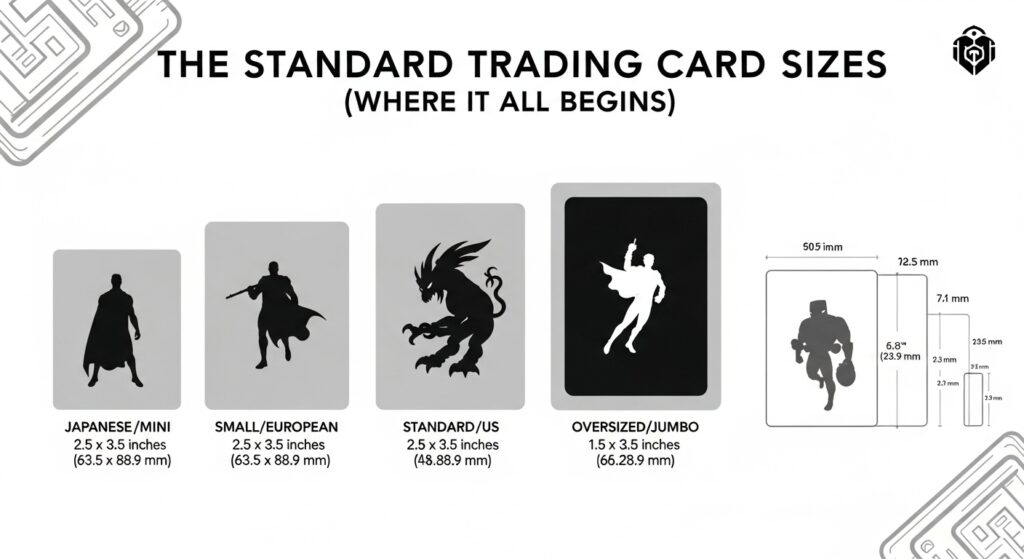
Let’s start with the “default setting” of the trading card universe. The one size that quietly runs the world.
The Standard Size: 2.5 x 3.5 inches is what most people are holding when they think of Standard Trading Cards. Baseball cards, basketball cards, even many Pokémon and Magic: The Gathering Modern Horizons 2 cards follow this format. It’s like… the handshake everyone agrees on.
Now here’s where it gets slightly interesting. This size wasn’t chosen randomly. It fits perfectly in wallets (old-school ones), slides nicely into Card Sleeves, and aligns with Top Loaders and Binders without making collectors lose their minds.
And yeah, collectors can get weirdly specific about this stuff. I once heard someone say, “If it doesn’t fit the sleeve right, it doesn’t feel like a real card.” Bit dramatic, but also… kinda true?
What makes this size special:
- It’s universally compatible with storage tools
- Easy to handle without bending (unless you’re careless… which happens)
- Works across brands like Topps, Panini, and Upper Deck
- Maintains strong Card Value due to standardization
This size is basically the backbone of Card Organization and Collection Management, and honestly, if cards were people, this would be the one who always shows up on time and brings snacks.
Oversized Trading Cards Size Guide (Because Bigger Sometimes Wins)
Now let’s talk about the loud ones. The cards that walk into a room and don’t whisper they announce themselves.
Oversized Cards: 3.5 x 5 inches, up to 8 x 10 inches are exactly what they sound like big, bold, and kinda hard to store if you didn’t plan ahead. These include Jumbo Cards (up to 5 x 7 inches+) and even promotional giants like the 1964 Topps Giant series.
They’re often tied to Limited Edition releases or Promotional Cards, and sometimes come as Box Toppers—you know, those extra goodies sitting on top of a card box like a cherry on a sundae.
Why people love (and sometimes hate) them:
- They offer more room for Artwork Layout and insane Visual Appeal
- Often tied to Rare Cards or special releases
- But… they don’t fit standard Storage Boxes or Binders easily
I’ve seen collectors literally create custom storage setups just for these. One guy used a photo album meant for weddings. Said it was “romantic for the cards.” Not sure how to feel about that.
Still, oversized cards are like posters you can hold they’re less about practicality and more about presence.
Mini Trading Cards Size Guide (Tiny But Not To Be Underestimated)
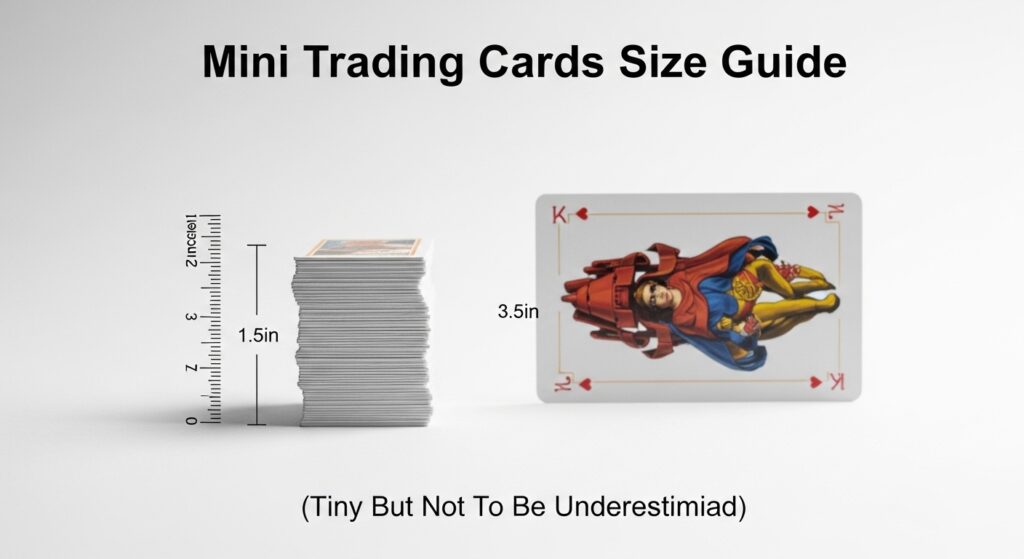
Now we shrink things down. Way down.
Mini Cards: < 2.5 x 3.5 inches include some of the most charming, frustrating, and oddly collectible formats out there. The Topps Mini Baseball Card Set and Upper Deck Mini NHL Set are perfect examples.
And then there’s the extreme end: the Smallest Size: ~1 x 1.5 inches. These are so small you almost feel like you need tweezers. Or patience. Or both.
Why minis are special:
- Unique appeal in the Hobby Collecting world
- Often seen as novelty or niche Collectibles
- Can increase Card Rarity due to limited runs
But oh man… storing them? Bit of a nightmare if you’re not prepared.
You’ll need:
- Special Acid-free Sleeves
- Custom compartments in Binders
- Careful Handling Techniques
A collector once joked, “Mini cards are like cats adorable, but they don’t cooperate.” Honestly, can’t argue.
Square, Panoramic, and Tallboy Cards (The Rebels of Card Dimensions)
Here’s where things get fun. And slightly chaotic.
Not all Card Dimensions follow the rectangle rule. Some just… don’t care.
Square Cards: 2.5 x 2.5 inches break the traditional look and offer symmetry that feels oddly satisfying. Then you’ve got Panoramic Cards: ~3.75 x 8 inches, which stretch horizontally like a cinematic scene perfect for team shots or dramatic artwork.
And then there’s the quirky Tallboys: 3.5 x 5.75 inches, which feel like someone just stretched a standard card vertically and said, “yeah, that’ll do.”
Why these formats exist:
- Enhance Creative Formats and storytelling
- Offer unique Display Options
- Stand out in Card Trading circles
But again, storage becomes a puzzle. These don’t fit neatly into standard systems, so collectors often mix and match Magnetic Holders or custom sleeves.
It’s messy, but in a good way.
Special Formats: Die-Cut, Patch, Booklet & More
Now we enter the “extra” territory. The cards that don’t just sit there they perform.
You’ve got:
- Die-cut Cards (custom shapes, sometimes wild ones)
- Patch Cards (with actual fabric pieces embedded)
- Booklet Cards (they open… like tiny books, yeah)
- Panel Cards (multiple connected sections)
These aren’t defined by size alone, but by design and Shape (Rectangular, Square, Custom).
They often feature:
- Premium Cardboard Material
- Glossy Finish or Matte Finish variations
- High-end Printing Quality
And because they’re usually part of Special Releases or premium sets like 2013–14 Panini National Treasures Basketball, their Collectibility and Market Demand can skyrocket.
But they also demand respect. You don’t just toss these into a box. You protect them like they owe you money.
Storage & Protection (Because Size Changes Everything)
Let’s be real knowing what size are trading cards is only half the story. The other half is keeping them safe.
Different sizes require different tools:
- Card Sleeves for everyday protection
- Top Loaders for rigidity
- Binders for display and organization
- Storage Boxes for bulk collections
- Magnetic Holders for premium cards
And always always go for Acid-free Sleeves. Regular plastic can damage cards over time, and that’s not a mistake you wanna learn the hard way.
Storage isn’t just about protection. It’s about Storage Compatibility, Card Display, and honestly… peace of mind.
Comparing Different Card Formats (Because It’s Never Just One Size)
If you’ve ever tried comparing mini vs standard cards or standard vs jumbo trading cards, you’ll know it’s not just about size it’s about purpose.
Here’s the vibe:
- Standard = practical, universal
- Mini = collectible, niche
- Jumbo = display-focused
- Panoramic = artistic
- Tallboy = unique proportions
Each format plays a different role in the ecosystem of Trading Cards (TC / TCG).
And yeah, sometimes collectors chase all of them. Which leads to chaos. Beautiful, organized chaos… hopefully.
The Economics of Size (Yep, It Matters)
Size can actually affect Card Value. Not always, but often enough.
Rare trading card sizes like limited mini sets or oversized promotional pieces can carry higher Card Rarity. And when rarity meets nostalgia? That’s when prices get interesting.
Factors that influence value:
- Limited Edition runs
- Unique dimensions
- Brand (like Topps Stadium Club Baseball or Upper Deck SPx Hockey)
- Condition and storage
It’s not just cardboard. It’s supply, demand, and a bit of emotion mixed in.
A Collector’s Story (Because This Isn’t Just Technical)
I once read a quote from a collector who said, “I don’t collect cards. I collect moments that happen to be printed on them.”
That stuck with me.
Whether it’s a tiny mini card or a giant jumbo piece, each one carries something maybe a memory, maybe a player, maybe just a weird obsession you can’t quite explain.
And that’s the thing. Size matters… but meaning matters more.
How to Choose the Right Trading Card Size for You
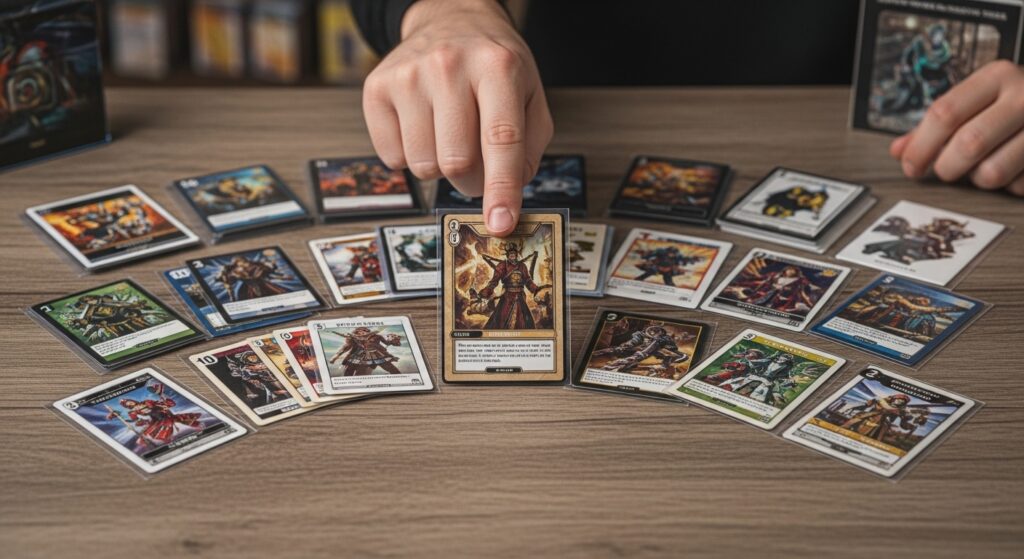
If you’re just getting started, here’s a not-so-perfect way to decide:
- Go standard if you want simplicity
- Try mini if you like uniqueness
- Explore oversized if you enjoy display
- Mix formats if you’re okay with a little chaos
There’s no “correct” choice here. Just what feels right in your hands.
Frequently Asked Questions
trading card sizes
Trading card sizes vary depending on the type, but the most common standard size is 2.5 x 3.5 inches, along with variations like mini, jumbo, square, and panoramic formats.
how big is a trading card
A typical trading card is 2.5 x 3.5 inches, which is considered the industry standard for most sports and collectible card games.
how big are trading cards
Most trading cards are 2.5 x 3.5 inches, but they can also come in different sizes such as mini cards (smaller) or oversized cards (larger) depending on the set.
tcg card dimensions
TCG card dimensions usually follow the standard 2.5 x 3.5 inches format, ensuring compatibility with sleeves, binders, and storage accessories.
tcg card sizes
TCG card sizes include standard (2.5 x 3.5 inches), mini, oversized, and specialty formats like square or panoramic cards, each offering unique collecting and display options.
Read this Blog: https://marketmetl.com/rare-pokemon-cards/
Final Thoughts (A Little Messy, A Little Honest)
So yeah… how big is a trading card?
It can be 2.5 x 3.5 inches, or it can stretch into something much bigger, or shrink into something almost comically small. It can be square, tall, wide, or shaped like something you didn’t expect.
But the real answer? It’s as big as the story it carries.
If you’ve got a favorite card or a weird one you don’t quite understand hold onto it. That’s kinda the whole point.
And hey, if you’ve got a story about your collection, or a card size that surprised you, I’d genuinely like to hear it. Drop it somewhere, share it with someone, keep the conversation going.
Because this hobby? It’s not just about cards. It’s about connection, even if it’s just between you and a tiny piece of printed cardboard.