There’s a strange little silence that happens right before a Graduation ceremony starts. It’s noisy, technically, with aunties waving phones and principals pretending not to panic over seating charts, but underneath all that there’s this soft buzzing feeling. Like everyone suddenly realizes time has feet and it walked too fast.
And there you are, fixing your Graduation cap for the fifth time.
Too tight.
No wait, too loose.
Why does it suddenly feel like your whole future depends on whether the tassel sits correctly?
I remember someone beside me whispering, “Do these things come in human sizes or pizza box sizes?” and honestly… fair question.
Because until graduation day arrives, most people never stop to think about Graduation cap dimensions, the shape of a Mortarboard, or why the square board is even square to begin with.
It’s just a hat, right? Except it kinda isn’t. It’s history, symbolism, tradition, status, nerves, photographs, and a little bit of cardboard stubbornness all balanced on your head.
Funny object, really.
This guide dives deep into everything about Graduation cap size, measurements, traditions, construction, fitting tips, decoration ideas, and even why different countries use slightly different styles.
Some of this stuff is surprisingly emotional once you get into it. Tiny details can carry whole centuries around with them.
| Graduation Cap Part | Standard Size |
|---|---|
| Graduation cap board size | 9” × 9” (22.8 × 22.8 cm) |
| Large mortarboard size | 10” × 10” (25.4 × 25.4 cm) |
| Cap depth | 3.5”–4.5” |
| Tassel length | 9”–12” |
| Head circumference fit | 19”–24” |
| Children’s graduation cap | 8” × 8” |
| Doctoral tam size | 10”–12” diameter |
| Cap board thickness | 0.1”–0.2” |
| Standard fit type | One-size-fits-most |
| Common material | Polyester with cardboard insert |
The Story Behind the Graduation Cap

The modern Square academic cap traces its roots back to Medieval European universities, where Scholars and Clergy wore robes and structured headwear to stay warm in giant stone buildings that were basically stylish refrigerators.
Back then, universities like University of Oxford and University of Cambridge helped shape many of the Academic dress traditions we still see today.
The cap evolved slowly through centuries, changing from soft skullcaps into the rigid flat-topped American-style mortarboard and the softer Doctoral tam designs.
Honestly, there’s something almost poetic about that.
A student in 2026 wearing a cap connected, in a weird little invisible line, to students from hundreds of years ago.
The Academic regalia became more standardized as universities expanded and education became more accessible. Historians often connect this shift with the Democratization of education and growing ideas around Equality in education.
Everybody wearing similar attire created a kind of visual sameness, a reminder that knowledge matters more than wealth. Though, ofcourse, humans still found ways to flex prestige through tassels and honors cords. Humans stay human.
Today, the Cap and gown symbolize achievement, perseverance, and shared academic identity. The flat square top is even said to represent the “book” or foundation of learning a quiet Knowledge foundation metaphor sitting directly above your head.
Bit dramatic? Maybe.
But graduations are dramatic days.
Standard Graduation Cap Dimensions Explained
So, what size is a standard graduation cap actually?
Most people are surprised to learn there’s a fairly consistent sizing structure behind these hats. While styles vary slightly between institutions and manufacturers, standard measurements usually fall into similar ranges.
Here’s a quick breakdown of common Standard graduation cap measurements:
| Component | Typical Size |
|---|---|
| Board size | 9” x 9” or 10” x 10” |
| Cap depth | 3.5” to 4.5” |
| Tassel length | 9” to 12” |
| Cap board thickness | 0.1” to 0.2” |
| Headband size | Adjustable or fitted |
| Square board angle | Centered above head |
The classic Graduation cap square size is typically around 9 inches by 9 inches for high school and undergraduate students.
Some colleges use slightly larger boards for better stage visibility in photos. Makes sense honestly, because graduation photography is basically controlled chaos.
These are the typical Dimensions of graduation cap designs used across schools:
- Undergraduate graduation cap: Standard square mortarboard
- High school graduation cap: Usually identical to undergraduate sizing
- Doctoral graduation cap: Often replaced with velvet Tam-style caps
- British mortarboard: Slightly different shaping and construction
- Round tam cap size styles: More common in advanced academic ceremonies
If you’ve ever searched things like how big is a graduation cap or are all graduation caps the same size, the answer is mostly yes… but also not exactly. Tiny variations happen depending on institution traditions and manufacturers.
Academic clothing loves consistency but secretly enjoys complications too.
Graduation Cap Measurements in Inches and Centimeters
For international students and custom orders, measurements are often given in both inches and centimeters.
Here’s a simple conversion chart for common Graduation cap measurements:
| Measurement | Inches | Centimeters |
|---|---|---|
| Standard board width | 9” | 22.8 cm |
| Large board width | 10” | 25.4 cm |
| Average cap depth | 4” | 10.1 cm |
| Tassel length | 9” | 22.8 cm |
| Head circumference range | 19”-24” | 48-61 cm |
These numbers matter more than people think. A badly sized cap can wobble during walking, slide during photos, or fly off during the Cap toss ceremony, which sounds funny until your decorated masterpiece lands in a puddle.
Not ideal.
When searching for square cap dimensions in cm or graduation cap inches and centimeters, always check manufacturer guides because some schools use custom sizing standards.
Especially with Asian academic institutions, you may notice slightly smaller board dimensions or alternate cap shapes influenced by regional traditions.
How to Measure for a Graduation Cap

Measuring your head for a cap isn’t hard, but people somehow overcomplicate it every single year.
You only need a flexible tape measure.
Wrap it around your head roughly one inch above the eyebrows and ears. That measurement gives your Head circumference measurement. Easy enough.
Still, there’s always somebody measuring over fluffy hair and wondering why the cap fits like a soup bowl afterward.
For accurate Graduation cap circumference sizing:
- Keep the tape snug but not tight
- Measure twice
- Account for hairstyles
- Avoid measuring over hats or hoodies
- Stand naturally instead of stretching your forehead like a surprised cartoon character
Most schools now use One-size-fits-most graduation cap systems with elastic interiors. These rely on an Adjustable circumference mechanism or Elastic fit system to accommodate different head sizes.
Which is practical… though sometimes slightly chaotic.
An Elastic graduation cap is convenient, but not always perfect for people with smaller heads or heavy hairstyles. That’s why some students use discreet hairpins for better Cap stability.
Honestly, bobby pins deserve honorary degrees at this point.
Understanding Graduation Cap Construction
A lot of people assume the cap is just cardboard wrapped in fabric. Which is technically true-ish, but there’s more engineering happening than you’d expect.
Modern Cap construction usually includes:
- Plastic cap base
- Lightweight cardboard insert
- Polyester or matte fabric covering
- Reinforced headband
- Central button attachment
- Structured top board
The Circle on a graduation cap that little button in the center isn’t just decorative. It secures the tassel and helps maintain Balance and stability across the board.
Good construction matters because the cap has to remain level while students walk, hug relatives, pose for photos, cry a little, and accidentally bump into folding chairs.
The importance of Flat board alignment becomes very obvious in group photos. Crooked caps make entire rows look uneven. Photographers notice this immediately. Parents notice it eventually.
Some premium caps now include:
- Reinforced corners
- Better Weight distribution
- Water-resistant fabric
- Hidden elastic supports
- Softer sweatbands
And yes, there are even luxury custom versions now. Graduation got fancy.
Graduation Cap Sizing for Different Education Levels
Not every graduation cap is identical.
Elementary students often wear smaller versions because giant mortarboards on tiny heads look unintentionally hilarious. Cute, but hilarious.
Typical categories include:
Children’s Graduation Cap Size
Smaller board widths, lighter materials, shallower depth. Designed for comfort and stability.
Elementary Graduation Cap Dimensions
Usually around 8” square boards with softer elastic interiors.
Middle School Graduation Cap Size
Transitional sizing between child and adult dimensions.
High School Mortarboard Size
Generally uses standard adult sizing.
College Graduation Cap Dimensions
Most universities use the traditional 9” square American mortarboard dimensions.
Doctoral Tam Dimensions
Doctoral graduates often wear rounded velvet tams instead of mortarboards. These are softer, larger, and intentionally more prestigious-looking because academia absolutely loves visible hierarchy.
The Academic hierarchy within regalia becomes obvious during ceremonies. Different tassels, sleeve shapes, velvet trims all tiny visual signals of scholarly status.
Human beings do enjoy symbols. We really, really do.
Graduation Tassel Placement and Symbolism

The tassel deserves its own moment honestly.
The Graduation tassel symbolizes transition from candidate to graduate. During many ceremonies, students move the tassel from right to left after receiving their diploma.
That little movement can feel surprisingly emotional.
One second you’re waiting.
Next second you’re officially done.
The Tassel movement tradition is one of those rare ceremonial gestures that still feels meaningful even in giant crowded stadium graduations where half the audience can’t hear the speaker properly.
Standard Graduation tassel size ranges from 9 to 12 inches, depending on cap style and degree level.
Gold tassels often indicate honors or doctoral status, while different colors represent Academic disciplines like nursing, law, engineering, or arts.
Tiny strings carrying entire identities around. Strange and lovely.
Custom Graduation Cap Dimensions and Decoration Ideas
This is where things get personal.
A Custom graduation cap turns tradition into storytelling. Suddenly the cap isn’t just institutional attire anymore it becomes memory, personality, rebellion, gratitude, grief, joy, survival.
Some students decorate theirs with glitter.
Others with memorial photos.
Some with anime references and pure chaos.
Popular Graduation cap decoration styles include:
- Floral designs
- Rhinestones
- Minimalist quotes
- Family tributes
- National flags
- Photo collage cap design
- LED lighting decoration
- Cultural artwork
- Inspirational messages
A well-made DIY graduation cap should still maintain proper Mortarboard stability though. Heavy decorations can shift the center of gravity and affect Cap stability during walking.
That’s why lightweight materials work best.
If decorations are too heavy, the board tilts sideways and suddenly your graduation photos look like your cap is trying to escape.
For best results:
- Keep decorations centered
- Avoid overloading corners
- Use foam backing sparingly
- Preserve Flat top cap dimensions
- Test balance before ceremony day
Many students also incorporate Cultural motifs into their designs. In multicultural ceremonies, you’ll often see caps celebrating heritage, language, immigration journeys, and family sacrifice.
Those are usually the ones that make people cry a bit.
British vs American Mortarboard Measurements
There are subtle differences between regional styles.
The British mortarboard measurements tradition tends to favor slightly smaller boards and softer shaping compared to the larger American-style mortarboard design.
British universities also maintain stronger historical ties to older Academic tradition history, especially institutions like Oxford and Cambridge.
Meanwhile, American ceremonies emphasize spectacle, uniformity, and the iconic toss.
The Cap toss tradition itself became widely popular after military graduations in the United States. It symbolizes release, freedom, and achievement. Though somewhere every year, at least one cap gets permanently lost to a tree.
A sacrifice to education, perhaps.
Graduation Cap Material and Durability

Cheap caps wrinkle fast. Good caps survive storage.
That’s the reality.
Most modern caps use polyester blends because they resist creasing and photograph well under bright lighting. Some eco-friendly schools now use recycled materials too, which honestly feels overdue.
When considering Graduation cap material, important factors include:
- Breathability
- Wrinkle resistance
- Weight
- Shape retention
- Comfort
- Cost efficiency
Higher-quality Mortarboard construction improves durability and helps maintain clean Graduation cap top size alignment.
Some caps even include moisture-resistant coatings now, because outdoor graduations love surprise weather drama.
Graduation Cap Storage Tips
You’d think after all the ceremony stress people would carefully preserve their caps.
Nope.
Half end up crushed in closets beside old yearbooks and mystery charger cables.
Proper Graduation cap storage helps preserve sentimental value and decorations.
Best practices include:
- Store inside a sturdy Storage box
- Avoid humidity
- Keep tassels untangled
- Protect decorated surfaces
- Lay flat when possible
Choosing the correct Graduation cap storage box size matters too. Oversized boxes allow movement that can damage decorations.
And trust me, glitter damage spreads like emotional confetti.
The Meaning Behind Academic Regalia
Beyond measurements and dimensions, graduation attire carries emotional symbolism people sometimes underestimate.
The Graduation gown, tassel, hood, and cap together represent scholarship, perseverance, and institutional belonging. The uniform appearance creates Visual unity, reminding graduates they are part of something larger than themselves.
There’s also this quiet dignity in wearing clothing rooted in centuries of learning traditions.
A grandfather who never had educational opportunities may cry watching his granddaughter cross a stage in full Ceremony attire.
A first-generation student might decorate their cap with the phrase “We did it.”
Because sometimes graduation is never just one person graduating.
Sometimes entire families cross that stage emotionally.
That’s why these traditions endure even when people joke about uncomfortable robes and overheating in summer ceremonies.
Symbols matter because humans need visible ways to honor invisible effort.
Practical Graduation Cap Fitting Guide
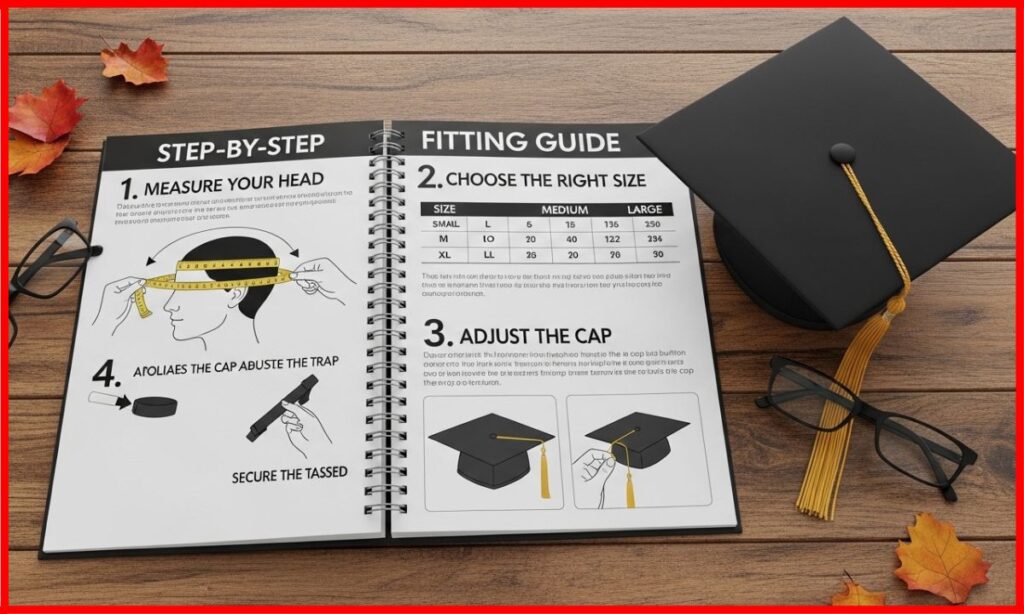
If you want your cap to actually behave during the ceremony, follow these simple tips:
- Position the board parallel to the ground
- Secure loose caps with pins
- Keep the tassel attachment centered
- Avoid oversized hairstyles after fitting
- Practice walking beforehand
- Check photos from multiple angles
Your Graduation cap fitting guide should prioritize comfort and alignment equally.
A perfectly straight cap somehow makes people stand straighter too. Funny psychological thing.
And yes, people absolutely notice crooked caps in photos later. Every family has at least one relative zooming in dramatically afterward.
Why Graduation Caps Still Matter
Some traditions fade.
This one hasn’t.
Even in a world obsessed with digital everything, the Graduation ceremony attire still carries emotional power. Students want the photos, the tassel flip, the dramatic walk, the badly balanced cap, the hugs afterward.
The cap is a visual ending.
A physical marker that says: this chapter happened.
The continued popularity of Standardized academic attire also reinforces ideas around shared accomplishment and institutional identity. Whether it’s a tiny preschool cap or an elaborate doctoral tam, the symbolism stays recognizable.
A square little hat somehow became one of the world’s most enduring educational symbols.
Bit weird when you think about it.
Beautiful too.
Frequently asked Questions
graduation cap dimensions
Standard graduation cap dimensions are usually 9.4 × 9.4 inches (24 × 24 cm) for the square top, with a depth of about 3–4 inches (7.6–10 cm). Most caps also include an elastic band that fits head sizes between 22–25 inches.
grad cap dimensions
Typical grad cap dimensions include a flat square board measuring around 9.4 inches (24 cm) on each side and a tassel about 9 inches (23 cm) long. Doctoral caps may be slightly larger depending on the institution.
what are the dimensions of a graduation cap
The dimensions of a graduation cap generally include a 9.4-inch square top, 0.25–0.5 inch thickness, and a 3–4 inch deep skull cap. Children’s caps are usually a bit smaller for a better fit.
graduation cap size top
The graduation cap top is commonly 9.4 × 9.4 inches (24 × 24 cm) in standard high school and college designs. Some doctoral mortarboards can reach up to 10 inches wide.
dimensions of a grad cap
Most grad caps feature a square board around 9.4 inches wide with a soft fitted base underneath. The cap is designed to sit flat and balanced during graduation ceremonies and cap tosses.
Read this Blog: https://marketmetl.com/how-big-is-2-cm/
Final Thoughts on Graduation Cap Size and Dimensions
At first glance, a graduation cap seems simple. Just fabric and cardboard and tradition stitched together. But once you look closer, there’s history sitting in every corner of it.
The measurements matter because comfort matters.
The shape matters because symbolism matters.
The traditions matter because memory matters.
Whether you’re searching for standard graduation cap dimensions, figuring out how wide is a graduation cap, comparing doctoral cap vs undergraduate cap, or planning a deeply personal decorated design, remember this: the cap is more than ceremony clothing.
It’s evidence.
Evidence that you stayed up late studying.
Evidence that you survived exams and deadlines and self-doubt and weird cafeteria food.
Evidence that you reached an Educational milestone worth celebrating loudly.
So when the tassel moves and the caps fly into the air, let yourself feel the moment fully. Even if your mortarboard sits slightly crooked. Even if the elastic feels weird. Even if the photos come out blurry because someone’s uncle forgot how cameras work under pressure.
That’s kinda part of the magic too.
And if you’ve got your own graduation cap story, funny fitting disaster, or decoration idea, share it somewhere. Those tiny stories end up meaning more than people expect.