There’s something oddly emotional about measuring things. Like, you’re in the kitchen, maybe it’s a rainy afternoon, and you’re pouring Milk into a chipped measuring cup, thinking about how your grandmother never measured anything and yet everything tasted perfect.
And here you are, googling a Milliliters to Grams Conversion Calculator, because the recipe says 250 mL but your scale only speaks in grams, and honestly, who taught these tools to disagree like this.
I remember once trying to bake a cake for someone importanti mportant in the quiet way, not the dramatic movie way and I got stuck on converting Volume to Weight Conversion.
It felt silly, but also not silly at all, because small numbers can ruin big intentions. That’s when I learned that behind every teaspoon, every gram, there’s a tiny science whispering: “Hey, I matter too.”
This article isn’t just about numbers, not really. It’s about understanding the relationship between Volume, Mass, and the invisible glue called Density that holds them together.
And yeah, we’ll talk formulas and conversions and all that nerdy-good stuff, but we’ll also make it feel a bit more… human, if that makes sense.
Quick mL to g Conversion Table
| Ingredient | Density (g/mL) | 50 mL | 100 mL | 200 mL |
|---|---|---|---|---|
| Water | 1.00 | 50 g | 100 g | 200 g |
| Milk | 1.03 | 51.5 g | 103 g | 206 g |
| Cooking oil | 0.88 | 44 g | 88 g | 176 g |
| All-purpose flour | 0.53 | 26.5 g | 53 g | 106 g |
| Sugar (granulated) | 0.85 | 42.5 g | 85 g | 170 g |
Understanding the Heart of Volume to Weight Conversion
Let’s start simple, but not too simple because life rarely is. Volume to Weight Conversion is basically about turning space into substance. Like, how much does something weigh if you know how much space it takes up.
Here’s the thing tho 1 Milliliter (mL, ml, mℓ) of water equals 1 Gram (g). Easy, right? But then you try that with Cooking oil or All-purpose flour, and suddenly the universe says, “Nope, not today.”
That’s because of Density-based Conversion. Density is like personality for substances some are heavy for their size, some are light and fluffy (looking at you, flour).
In science-y words, density is:
- Mass per unit volume
- Measured in g/mL
- A key player in all Measurement Units Conversion
And suddenly, your kitchen becomes a mini lab, whether you asked for it or not.
The Famous Formula (that secretly runs everything)
Now, here’s the formula that people like Joe Sexton and Ethan Dederick (PhD) often emphasize in educational resources:
grams = milliliters × density
Simple, almost suspiciously simple.
For example:
- 5 mL × 0.7 g/mL = 3.5 g
Boom. That’s your answer. But also, that’s just the beginning of understanding Physical Quantities and how they dance together.
And if you ever doubt the importance of this, just know that institutions like National Institute of Standards & Technology (NIST) literally exist to make sure we don’t mess this up globally. So yeah, it’s kinda serious.
Milliliters to Grams Conversion Calculator in Everyday Life
You don’t always notice it, but this stuff sneaks into your day like a cat that owns the house.
In Cooking & Baking, for instance:
- Recipes from Europe use Metric System measurements
- American recipes lean toward cups and tablespoons
- Your brain just wants consistency but doesn’t get it
So you end up converting:
- Teaspoons to grams
- Cups to milliliters
- Fluid ounces to something you actually understand
And honestly, a milliliters to grams calculator becomes your quiet best friend.
A home baker once told me, “I stopped guessing flour measurements and my cakes stopped betraying me.” That line stayed with me, oddly poetic for something about flour.
Density: The Secret Personality of Ingredients
Let’s talk density again, but like we’re gossiping about it.
Every ingredient has its own vibe:
- Water: 1 g/mL (predictable, dependable, slightly boring)
- Milk: ~1.03 g/mL (just a bit extra, but in a good way)
- Cooking oil: ~0.88 g/mL (lightweight, floats through life)
- All-purpose flour: ~0.529 g/mL (dramatic, full of air)
- Granulated sugar: ~0.845 g/mL (balanced, reliable-ish)
So when you’re converting mL to g conversion, you gotta ask: what exactly am I measuring?
Because 100 mL of oil is not 100 grams. And pretending it is… well, that’s how recipes go sideways.
A Slightly Chaotic Conversion Table (but useful, promise)
Here’s a quick reference for common ingredients:
| Ingredient | Density (g/mL) | 100 mL → grams |
|---|---|---|
| Water | 1.00 | 100 g |
| Milk | 1.03 | 103 g |
| Oil | 0.88 | 88 g |
| Flour | 0.529 | 52.9 g |
| Sugar | 0.845 | 84.5 g |
This kind of table is what resources like CK-12 Foundation and LibreTexts Chemistry often provide to help students not panic during Chemical Reactions or baking disasters.
Measurement Units Conversion Across Systems (and why it’s annoying)
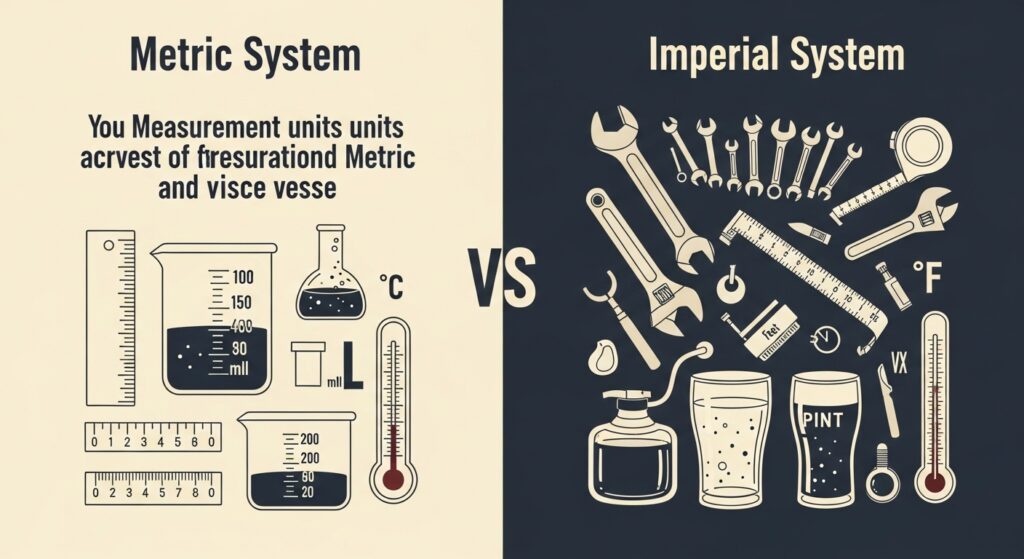
Let’s be real for a second Measurement Units Conversion is one of those things that makes you question humanity’s decisions.
Why do we have:
- Liters and Gallons
- Grams and Ounces
- Cubic centimeters (cc) and Cubic inches
It’s like the world couldn’t agree on a single language for numbers.
But the Metric System (aka SI Units) tries to fix that. It’s clean, logical, and honestly kinda beautiful in its simplicity.
Still, when you’re converting:
- Pints to mL
- Quarts to grams
- Tablespoons to milliliters
…it can feel like solving a puzzle you didn’t sign up for.
Chemistry, But Not Scary
In chemistry, this conversion stuff isn’t optional it’s survival.
When dealing with:
- Aqueous chemicals
- Powdered chemicals
- Mass-volume stoichiometry
You need precise Measurement Accuracy, or things go very wrong, very fast.
Imagine calculating a Reaction yield and being off because you guessed density. Yeah, no thanks.
That’s why students are taught early:
- Difference between Volume vs Mass
- Importance of Density conversion formula
- How to handle SI units conversion
It’s not just academic it’s practical, in a slightly intimidating way.
Milliliters to Grams Conversion Calculator for Cooking Accuracy
Back to the kitchen, where things are less explosive but equally dramatic.
Using a Milliliters to Grams Conversion Calculator helps with:
- Cooking accuracy
- Consistent taste
- Avoiding “why is this so dry” moments
Here’s how people usually mess it up:
- Assuming all liquids behave like water
- Ignoring ingredient density
- Using volume for dry ingredients inconsistently
A chef once said, “Baking is chemistry with emotions attached.” And yeah, that feels about right.
How to Convert mL to Grams Without Losing Your Mind
Let’s make this simple-ish:
- Identify the ingredient
- Find its density (Google is your friend here)
- Use the formula:
grams = milliliters × density
Example:
- 200 mL of oil
- Density = 0.88 g/mL
- Result = 176 grams
Done. Not too painful, right?
This is the essence of convert volume to weight thinking. It’s not hard, just… slightly annoying at first.
Educational Value: Why This Actually Matters
This isn’t just about recipes or lab work.
Learning Measurement definitions and Unit conversion builds:
- Logical thinking
- Attention to detail
- Confidence in problem-solving
It’s part of understanding the world, in a quiet, almost invisible way.
And once you “get it,” you really get it. Like riding a bike, but with numbers.
Practical Tips for Better Conversions
Let’s make life easier, because it should be, at least sometimes:
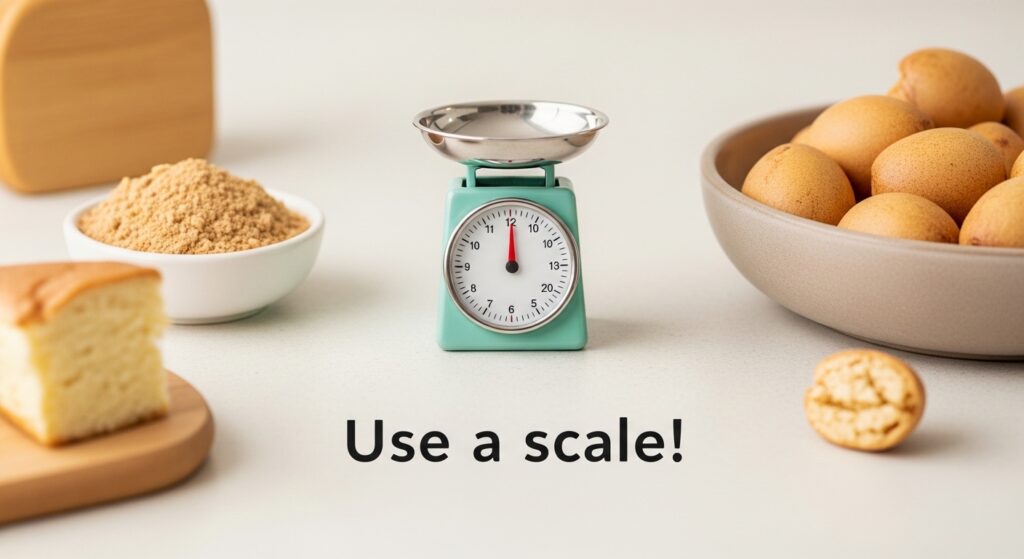
- Use a digital kitchen scale whenever possible
- Bookmark a reliable volume to weight calculator for recipes
- Keep a small density chart handy
- Don’t guess flour measurements (seriously, don’t)
- Learn a few common densities by heart
These little habits improve your measurement accuracy in cooking more than you’d expect.
Creative Ways to Use This Knowledge (yes, really)
You can actually get creative with this stuff:
- Adjust recipes confidently
- Experiment with ingredient substitutions
- Teach kids basic science through baking
- Impress someone by casually converting units mid-conversation (okay maybe not impress, but still)
It’s one of those skills that quietly upgrades your everyday life.
Read this blog; https://marketmetl.com/years-ago-calculator/
Frequently Asked Questions
ml to grams
Milliliters (mL) can be converted to grams (g) using the density of the substance. Multiply the volume by density to get the weight.
milliliters to grams
To convert milliliters to grams, you need to know the ingredient’s density. The formula is: grams = milliliters × density.
100 ml to grams
100 mL equals 100 grams only for water or substances with density 1 g/mL. For other ingredients, the weight will vary based on density.
ml to g
The conversion from mL to g depends on the material being measured. Use density (g/mL) to accurately convert volume into mass.
ml to gram
Milliliters to grams conversion requires multiplying the volume by the substance’s density. Different ingredients will give different results.
Conclusion: Small Numbers, Big Meaning
At the end of the day, a Milliliters to Grams Conversion Calculator isn’t just a tool it’s a bridge between intention and outcome.
It helps you:
- Bake something that tastes like love
- Mix something that works as expected
- Understand the relationship between Mass, Volume, and Density
And maybe, just maybe, it makes you appreciate the tiny details that hold everything together.
If you’ve ever struggled with how many grams in 1 milliliter, or wondered about accurate kitchen measurement conversions, you’re not alone. We’re all just figuring it out, one teaspoon at a time.
If you’ve got your own kitchen stories, conversion mishaps, or little victories share them. Someone else is probably measuring flour wrong right now and could use the solidarity.
And hey, next time you pour 100 mL of something, you’ll know it’s not just liquid. It’s a quiet little equation waiting to be solved.