I still remember the first time I actually noticed a water bottle properly. Not drank from it noticed it. I was packing for a dusty little trip, the kind where daily hydration suddenly becomes a personality trait.
I had three bottles on the table: one short n chunky thing, one tall elegant sorta tube, and one monster that looked like it belonged to a camel. And I thought… why on earth are water bottle dimensions all over the place?
Most of us never really pause to wonder about water bottle size, water bottle measurements, or why that one bottle fits perfectly in the car cup holders while another refuses like a stubborn cat.
But behind every bottle is a quiet set of numbers milliliters (ml), ounces (oz), inches, centimeters (cm) all quietly deciding whether your bottle fits in a lunchbox, your backpack, or the side pocket of a hiking bag.
Someone once joked during a hiking trip:
“The best bottle size is the one you actually bring with you.”
Not wrong, honestly.
In this guide we’ll explore water bottle dimensions, typical water bottle height, water bottle diameter, different water bottle capacity options, and even the surprisingly nerdy topic of bottle cap size. We’ll peek at charts, real-life examples, and a few odd little facts people rarely talk about.
And yeah… by the end of it, you might start noticing water bottles differently too. Slightly obsessively maybe.
Standard Water Bottle Dimensions (Quick Reference)
| Bottle Capacity | Volume (ml) | Typical Height | Diameter | Height (cm) | Common Use |
|---|---|---|---|---|---|
| 8 oz water bottle | 237 ml | 5.5 inches | 2.25 inch diameter | 14 cm | Kids bottles, small servings |
| 12 oz water bottle | 355 ml | 7 inches | 2.5 inch diameter | 17.8 cm | School use, lunchbox |
| 16.9 oz water bottle | 500 ml | 8 inches | 2.5–3 inch diameter | 20.3 cm | Standard bottled water |
| 20 oz water bottle | 591 ml | 8.9 inches | 3 inch diameter | 22.6 cm | Daily hydration |
| 750 ml bottle | 750 ml | 11 inches | 3 inch diameter | 27.9 cm | Gym workouts |
| 1 liter water bottle | 1000 ml | 12.25 inches | 3–4 inch diameter | 31.1 cm | Outdoor activities, hiking |
| 1.5 liter water bottle | 1500 ml | 12.5 inches | 4 inch diameter | 31.8 cm | Travel, long trips |
| 2 liter water bottle | 2000 ml | 12.5+ inches | 4 inch diameter | 31.8+ cm | Large beverage bottles |
Understanding Water Bottle Dimensions (The Basics Nobody Talks About)
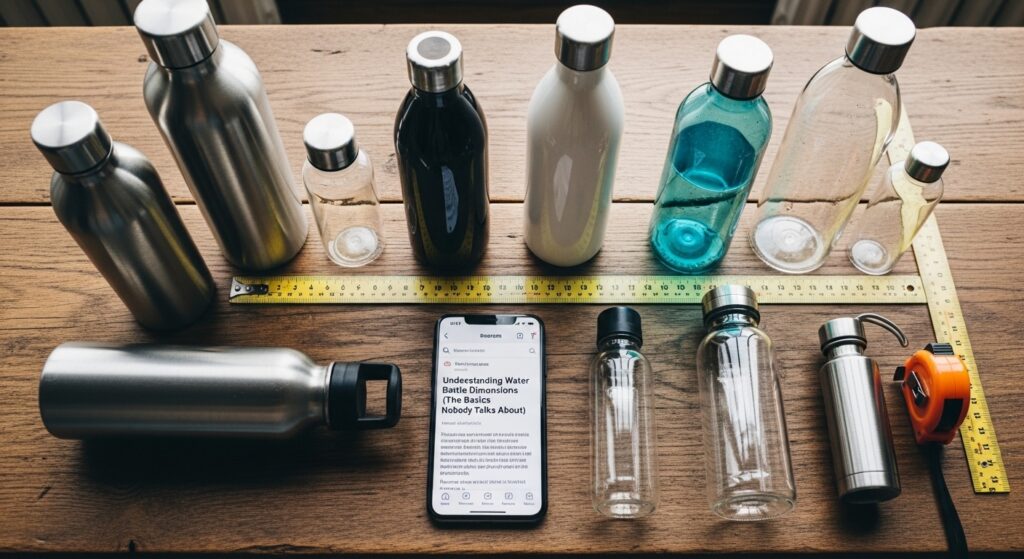
Before diving into fancy charts and numbers, let’s unpack what water bottle dimensions actually mean. Because surprisingly, a bottle’s size isn’t just about how much water it holds.
A bottle has several physical measurements:
- Water bottle height
- Water bottle diameter
- Water bottle width
- Water bottle length
- Water bottle capacity
- Water bottle volume
- Bottle weight
All these bits together determine how portable the bottle is, how comfortable it feels in your hand, and whether it survives the chaos of travel packing.
For example, a typical standard water bottle size the one you buy at a convenience store usually holds 16.9 oz water bottle (500 ml). The usual water bottle height sits around 8 inches or roughly 20.3 cm, with a 2.5 inch diameter.
But here’s the fun part: that’s just the average. Bottles can be weirdly different.
A small 8 oz water bottle (237 ml) might stand only 5.5 inches tall, while a big 2 liter water bottle can stretch beyond 12.5 inches.
And materials change things too. A plastic water bottle is lightweight and thin, while a stainless steel water bottle tends to be thicker, heavier, and slightly wider because of insulation layers.
Basically, the bottle you choose quietly shapes how easy daily hydration becomes.
Standard Water Bottle Dimensions Chart (Real Numbers That Matter)
Let’s take a practical look at a standard water bottle dimensions chart. These numbers aren’t exact for every brand, but they reflect the typical measurements used across the beverage industry.
Water Bottle Sizes Chart
| Bottle Capacity | Height | Diameter | Metric Height |
|---|---|---|---|
| 8 oz water bottle (237 ml) | 5.5 inches | 2.25 inch diameter | 14 cm |
| 12 oz water bottle (355 ml) | 7 inches | 2.5 inch diameter | 17.8 cm |
| 16.9 oz water bottle (500 ml) | 8 inches | 2.5–3 inch diameter | 20.3 cm |
| 20 oz water bottle (591 ml) | 8.9 inches | 3 inch diameter | 22.6 cm |
| 750 ml bottle | 11 inches | 3 inch diameter | 27.9 cm |
| 1 liter water bottle (33.8 oz) | 12.25 inches | 3–4 inch diameter | 31.1 cm |
| 1.5 liter water bottle | 12.5 inches | 4 inch diameter | 31.8 cm |
| 2 liter water bottle | 12.5+ inches | 4 inch diameter | 31.8 cm+ |
This water bottle sizes chart helps answer common questions like:
- how tall is a standard water bottle
- what is the diameter of a water bottle
- how many ml in a standard water bottle
Usually the sweet spot for portability is 500 ml, which explains why that size dominates vending machines, school use, and commuting routines.
How Water Bottle Height, Diameter & Shape Affect Portability
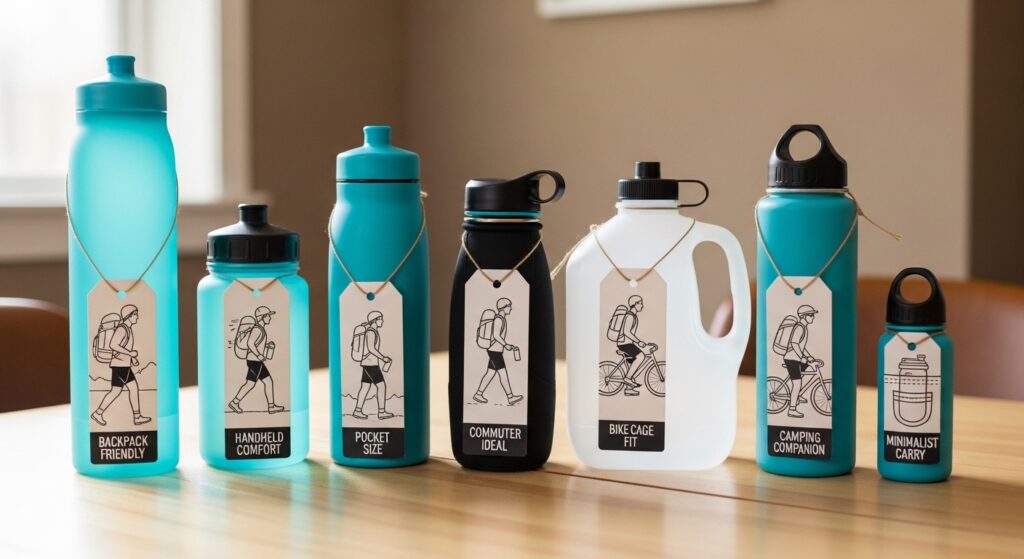
Now here’s a thing people rarely mention bottle shape changes everything.
Two bottles with the same water bottle capacity can feel completely different because of water bottle diameter and bottle height.
A tall slim bottle:
- fits in car cup holders
- slides easily into a backpack side pocket
- feels more elegant (somehow lol)
A wide bottle:
- stores more water comfortably
- feels more stable on tables
- sometimes refuses to fit anywhere practical
For gym workouts, many people prefer tall bottles around 11 inches or 27.9 cm, because they hold more water without becoming bulky.
For school use or lunchbox packing, shorter bottles around 7 inches often work better.
Honestly, bottle designers spend years tweaking these tiny details. A difference of 1 centimeter (cm) can make or break usability.
Plastic Water Bottle Dimensions vs Stainless Steel Bottles
Material also plays a surprisingly big role in plastic water bottle dimensions.
A typical plastic water bottle has thin walls, which means:
- more internal space
- lighter bottle weight
- slimmer shape
Meanwhile, a stainless steel water bottle needs thicker walls for insulation.
That means:
- slightly larger bottle diameter
- heavier weight
- more durable bottle design
Typical weights look like this:
| Bottle Type | Empty Weight | Full Weight (500 ml) |
|---|---|---|
| Plastic water bottle | 10–15 gram | ~515 gram |
| Stainless steel bottle | ~200 gram | ~700 gram |
Why the difference? Because water weight per ml is basically 1 gram per ml.
So a 500 ml bottle always adds about 500 grams of water.
This is why hikers sometimes choose lighter bottles carrying 2 liters of water already means 2000 grams of water alone.
Bottle Cap Size & Why It Matters More Than You Think
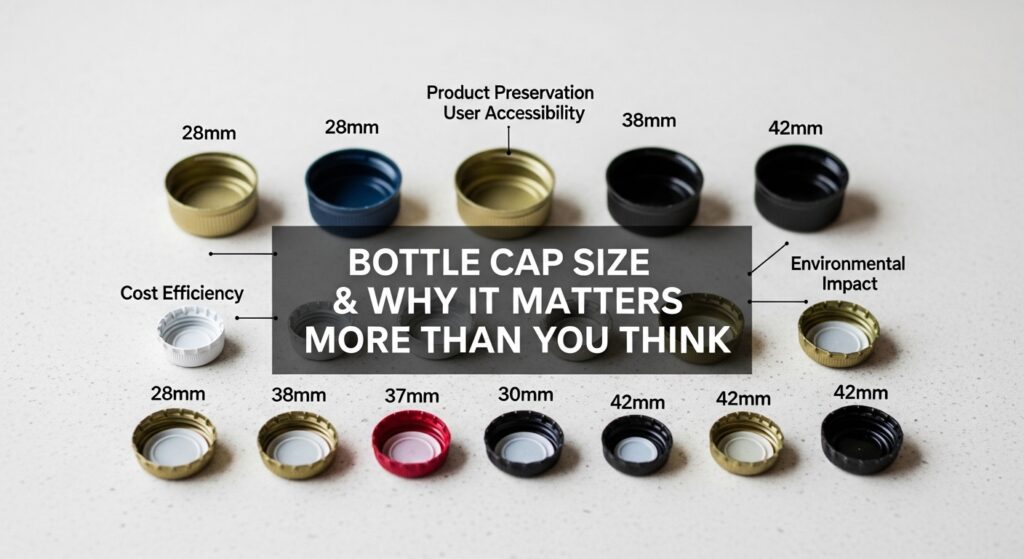
You’d think the bottle cap size wouldn’t matter much. But manufacturers obsess over it.
Common plastic bottle cap sizes include:
- 28 mm cap
- 30 mm cap
- 33 mm cap
In imperial terms this roughly equals:
- 1.0 inch cap
- 1.1 inch cap
- 1.2 inch cap
- 1.3 inch cap
The 28 mm cap is by far the most common plastic bottle cap size in the beverage industry. That’s why so many bottle lids look interchangeable.
Cap size affects:
- pouring speed
- drinking comfort
- leak resistance
- compatibility with filters or sports lids
For outdoor activities like beach outings or hiking, wide-mouth caps are often preferred because they’re easier to refill and clean.
Water Bottle Capacity Explained (ml, oz & Liter)
Understanding water bottle capacity sometimes feels confusing because bottles use both metric vs imperial bottle size systems.
Here’s a quick breakdown:
| Volume | Ounces | Typical Use |
|---|---|---|
| 250 ml | ~8 oz | Kids bottles |
| 350 ml | ~12 oz | Small reusable bottles |
| 500 ml | 16.9 oz | Standard bottled water |
| 750 ml | ~25 oz | Sports bottles |
| 1000 ml | 1 liter water bottle (33.8 oz) | Gym / travel |
| 1500 ml | ~50 oz | Long hikes |
| 2000 ml | ~67 oz | Large soda bottles |
A quick water bottle conversion oz to ml trick:
- 1 oz ≈ 29.57 ml
So if someone asks:
“how many bottles make 1 liter?”
Two 500 ml bottles = 1 liter.
Easy.
Choosing the Right Water Bottle Size for Real Life
Different situations call for different hydration bottle sizes.
Here’s what tends to work best:
For commuting
- 350 ml
- 500 ml
- fits car cup holders
For school use
- 350–500 ml
- lightweight
- easy to carry in lunchbox
For gym workouts
- 750 ml
- 1 liter water bottle
For hiking
- 1 liter
- 1.5 liter water bottle
For beach outings
- 1 liter+ bottles
- insulated stainless steel bottle
Bottle size isn’t about “bigger is better”. It’s about how naturally the bottle becomes part of your routine.
Fun Facts About Water Bottle Dimensions
Some tiny facts that surprise people:
• The average water bottle size worldwide is 500 ml
• The typical water bottle height is around 8 inches
• Most bottles have a 2.5–3 inch diameter
• The standard plastic bottle cap size is 28 mm
• A full 1 liter water bottle weighs roughly 1 kilogram
Another curious little thing:
Designers actually test bottles with thousands of hand shapes to ensure comfortable grip. Yep. Someone out there has a job called bottle ergonomics tester probably.
Wild world.
Read this Blog: https://marketmetl.com/how-long-is-7-inches/
Frequently Asked Questions
How Many Inches Is a Water Bottle
Most standard water bottles are about 8 to 10 inches tall. Smaller bottles may be around 6 inches, while larger bottles can reach 11–12 inches in height.
How Long Is a Water Bottle
A typical water bottle is usually 8 to 12 inches long, depending on its size and design. Larger bottles used for outdoor activities can be up to 16 inches or more.
How Tall Is a 16.9 oz Water Bottle
A 16.9 oz (500 ml) water bottle is usually about 8 inches (20 cm) tall. This size is common because it is easy to carry and fits well in most bags and car cup holders.
How Much Water Is in a Plastic Water Bottle
Most standard plastic water bottles contain 16.9 ounces (500 ml) of water. However, some bottles come in other sizes like 8 oz, 12 oz, 20 oz, or 32 oz.
How Many Inches Is a 16.9 oz Water Bottle
A 16.9 oz water bottle is typically around 8 inches tall with a diameter of about 2.5 inches. This size is considered the standard for many single-serve plastic water bottles.
Final Thoughts: The Quiet Design Behind Every Water Bottle
At first glance, a water bottle seems ridiculously simple. Just a container for water. But once you look closer at water bottle measurements, water bottle capacity, bottle height and diameter, and all those tiny millimeters (mm) and centimeters (cm)… you realize there’s a quiet engineering story behind every bottle.
From plastic water bottle dimensions to insulated stainless steel water bottle designs, every little detail shapes how we stay hydrated during daily hydration, commuting, travel packing, or long dusty hiking trails.
Next time you pick up a bottle, maybe pause a sec. Notice the bottle shape, the cap, the height, the way it fits in your hand.
Design like that rarely happens by accident.
And hey — if you’ve got a favorite bottle size or a weirdly shaped hydration bottle you swear by, share it. People are oddly passionate about their water bottles, and honestly… I kinda get it now. 💧