The first time you hold a Pokémon Trading Card Game (Pokémon TCG) card, it does a strange thing to your brain. It’s just cardboard, sure, but it feels like a ticket. A passport.
A tiny rectangular promise that says, yeah, something fun is about to happen. I remember being a kid and sliding one out of a crinkly booster pack, hands shaking a little for no good reason at all, and thinking wow, this is exactly the size it needs to be. Not bigger. Not smaller. Just… right-ish.
And that’s the quiet magic of Pokémon card size. It’s not random. It’s not vibes. It’s measurements, standards, history, and a whole lot of practical decisions made so millions of people could shuffle, trade, protect, and argue about cards without losing their minds.
If you’ve ever wondered how big are Pokémon cards, or why sleeves never quite fit when you buy the wrong ones at 11pm, you’re in the right place, honestly.
This guide is for collectors, players, parents, investors, and curious humans who just want the facts, but also the feeling behind those facts.
We’ll talk inches, millimeters, weight, thickness, oversized weirdos, sleeves, storage, and why this size has stuck since 1996 like a stubborn sticker on a lunchbox.
| Item | Measurement |
|---|---|
| Standard Pokémon card size | 2.5 × 3.5 inches |
| Pokémon card size (mm) | 63.5 × 88.9 mm |
| Aspect ratio | 5:7 |
| Card thickness | 0.012 in / 0.305 mm |
| Corner radius | ~0.125 in / ~3.18 mm |
| Card weight | ~1.78 grams |
| Oversized Pokémon card size | 5 × 7 inches |
| Recommended sleeve size | 2.64 × 3.58 in / 67 × 91 mm |
| Toploader size | 3 × 4 inches / 76 × 101 mm |
The Official Pokémon Card Dimensions (Yes, There Is Math)
Let’s get the hard facts out first, because numbers deserve their moment before we get sentimental again.
A Standard Pokémon card size is:
- 2.5 inches × 3.5 inches
- 63.5 mm × 88.9 mm
- Aspect ratio: 5:7
- Card thickness: 0.012 in / 0.305 mm
- Corner radius: ~0.125 in / ~3.18 mm
- Card weight: 1.78 grams
That rectangle has powered an entire ecosystem of trading cards, tournaments, playground trades, and late-night binder reorganizing sessions.
It’s the same size used by many collectible card games, including Magic: The Gathering, which helps with manufacturing and accessories and not reinventing the wheel every decade.
One longtime collector once told me, “If Pokémon cards were even a hair thicker, shuffling would feel like fighting a deck of coasters.” He wasn’t wrong, not even a bit.
Why Pokémon TCG Card Size Is Exactly This (And Not Something Funky)
Pokémon TCG card size and the invisible hand of standardization
When the Pokémon TCG debut happened in 1996, the goal wasn’t just cute monsters. It was playability. Cards needed to be:
- Easy for kids and adults to hold
- Durable enough for repeated shuffling
- Compatible with existing printing and cutting machines
- Familiar to players coming from other collectible card games (CCGs)
This size allows smooth deck building, clean shuffling, and consistent gameplay consistency across casual kitchen tables and competitive tournaments.
If cards were taller, hands would cramp. If they were wider, sleeves would wrinkle. Tiny changes mess with big systems, kind of like adding too much salt to soup, you know it instantly.
The Pokémon card dimensions are boring on paper, but brilliant in practice.
Pokémon Cards Aren’t All the Same (But They Are the Same Size)
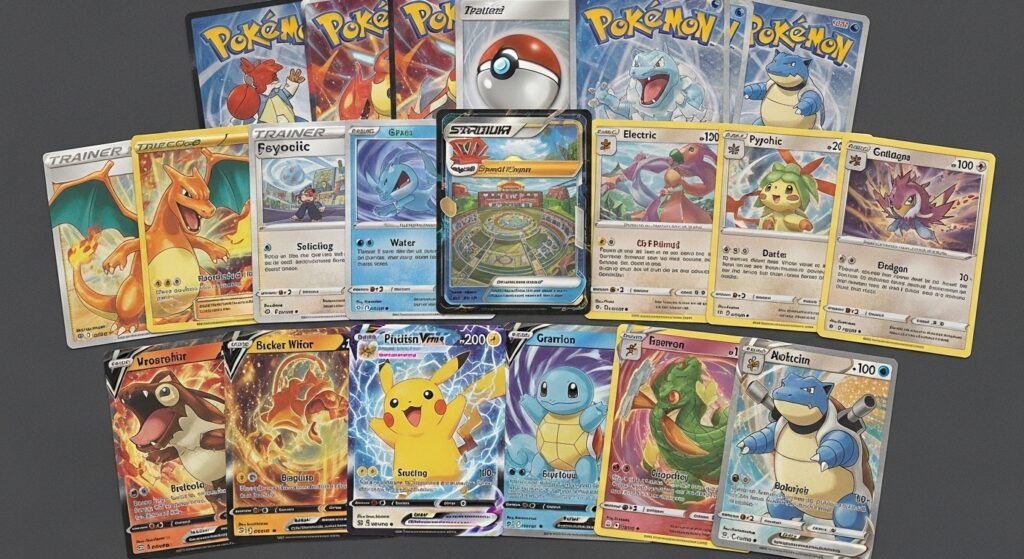
Here’s a small surprise for beginners: every playable Pokémon card is the same size, no matter what it does.
That includes:
- Pokémon cards
- Basic Pokémon
- Evolution Pokémon
- Trainer cards
- Item cards
- Supporter cards
- Stadium cards
- Energy cards
- Fire Energy
- Water Energy
- Grass Energy
- Electric Energy
- Psychic Energy
- Special Energy cards
Same dimensions. Same thickness. Same weight-ish. This uniformity matters more than people think, because uneven cards can lead to accidental marking, and marking leads to judge calls, and judge calls lead to awkward silence and hurt feelings at tournaments.
Uniform size equals fair play. Boring, noble fairness.
Oversized Pokémon Cards: Big, Bold, and Not for Decks
Oversized Pokémon cards and why they exist at all
Now, let’s talk about the giants. Oversized Pokémon cards are usually:
- 5 inches × 7 inches
These show up in special collection boxes, anniversary sets, and promotional products. They’re meant for display, not competitive play, and definitely not shuffling unless you enjoy chaos.
Oversized cards exist because humans love spectacle. A massive Holographic Charizard just hits different on a shelf. It’s the same reason posters exist when books already have covers.
They don’t fit standard sleeves. They don’t fit binders. They are statement pieces, and they know it.
Pokémon Card Size in Inches vs MM (Why Both Matter)
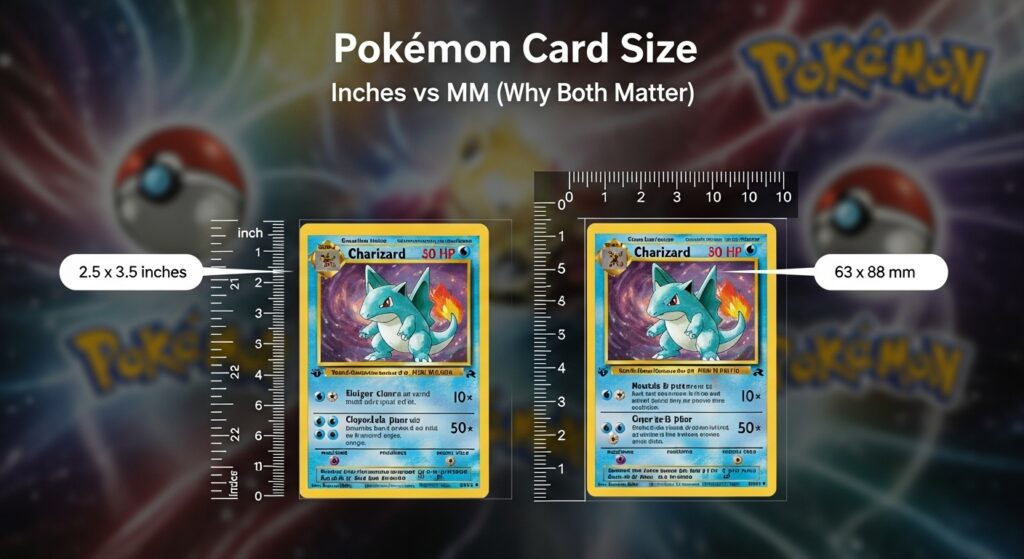
You’ll see measurements listed in inches in the US, and millimeters basically everywhere else. Knowing both helps when you’re shopping online or comparing accessories.
- Pokémon card size in inches: 2.5 × 3.5
- Pokémon card size in mm: 63.5 × 88.9
Sleeves, binders, and toploaders often list metric sizes, like:
- Sleeve size: 2.64 × 3.58 inches / 67 × 91 mm
- Toploader size: 3 × 4 inches / 76 × 101 mm
That tiny extra space is intentional. Cards need breathing room so corners don’t bend and edges don’t scuff when you slide them in and out. Cards, like people, hate being squeezed too tight.
Protecting the Size: Sleeves, Toploaders, and All That Plastic
Pokémon card protection isn’t optional if you care even a little
Because Pokémon cards are printed on layered cardstock, they’re sturdy but not invincible. Moisture, UV light, dust, and human fingers are all low-key enemies.
Common protection options include:
- Penny sleeves (cheap, flexible, basic polyethylene sleeves)
- Premium sleeves (thicker polypropylene sleeves, often textured)
- Toploaders (rigid plastic armor)
- Binder pockets
- Deck boxes
- Elite Trainer Box (ETB) storage solutions
Good sleeves protect against:
- UV protection
- Moisture protection
- Dust protection
- Accidental corner sadness
Also, sleeves help with counterfeit detection sometimes, because fake cards often feel wrong in weight or stiffness once sleeved. Your fingers know things before your brain does.
Pokémon Card Thickness, Weight, and the Feel Test
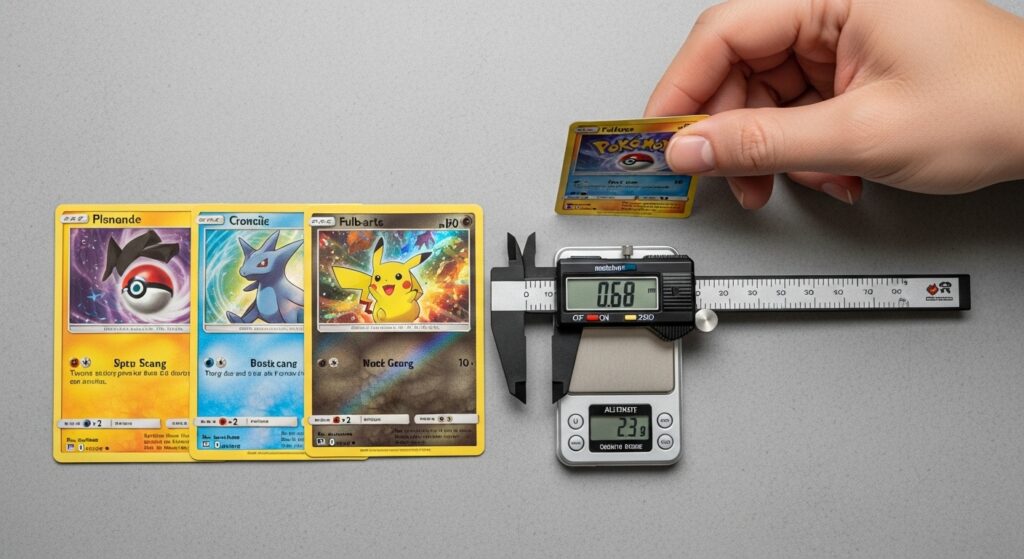
A real Pokémon card weighs about 1.78 grams and has a card thickness of 0.012 inches / 0.305 mm. That doesn’t sound like much, but stack 60 of them and suddenly physics matters.
Collectors often talk about:
- Card density
- Card durability
- Card flexibility
If a card feels too floppy, too stiff, or weirdly glossy, alarms go off. This matters in a world where over 34 billion cards sold means counterfeits are, sadly, a thing.
One grader once said, “Real cards feel tired in a good way.” That sentence stuck with me.
Pokémon TCG Card Size and Competitive Play
Pokémon TCG card size as a rulebook silent enforcer
In tournaments, card size affects:
- Shuffling fairness
- Deck concealment
- Handling speed
- Judge rulings
That’s why damaged or warped cards can be illegal. Size consistency supports community engagement and trust. Everyone’s deck behaves the same in the hand, which is more important than it sounds when adrenaline is high.
Competitive players obsess over sleeves that don’t stick, don’t glare, and don’t split. Millimeters matter when prizes are on the line.
Packaging Weights and Why People Weigh Packs (Yes, Really)
Sealed products have fairly consistent weights:
- Standard booster pack: 22–24 g
- Heavy booster pack: 24–25 g
- Light booster pack: 22–23 g
- Elite Trainer Box: 280–300 g
- Theme/Battle Deck: 190–210 g
- Special collection box: 500–800 g
Historically, people weighed packs hunting for holographics, especially Base Set Charizard era stuff. It’s less reliable now, but the habit remains like an old superstition.
Size and weight together shape the entire trading card market, from casual openings to six-figure auction sales.
Comparing Pokémon to Other Trading Cards
Pokémon cards share dimensions with:
- Magic: The Gathering
- KeyForge
- Many sports cards
They differ from:
- Yu-Gi-Oh!, which uses smaller cards
This compatibility means accessories cross over easily, and collectors who juggle multiple games don’t need separate storage systems for every obsession. Convenience is underrated.
Storage, Display, and Long-Term Survival
For long-term storage, keep cards:
- Sleeved
- In binders or boxes
- Away from sunlight
- In stable temperature and humidity
Avoid basements and attics. Cards remember trauma.
Displaying oversized cards or rares is fine, just use UV-safe frames. Card investment only works if the card survives long enough to be invested in.
Read this Blog: https://marketmetl.com/water-weigh/
Why This Size Will Probably Never Change
Changing the Standard Pokémon card size would break:
- Accessories
- Storage systems
- Tournament infrastructure
- Decades of muscle memory
Standardization is comfort. It’s why the game still feels familiar to someone who hasn’t played since childhood. The size is part of the identity, quiet but essential.
Frequently Asked Questions
What is the standard Pokémon TCG card size?
The standard Pokémon TCG card size is 2.5 × 3.5 inches (63.5 × 88.9 mm), which is the same size used in most trading card games.
Are all Pokémon cards the same size?
Yes, Pokémon, Trainer, and Energy cards are all printed in the same size to ensure fair gameplay and easy shuffling.
How big are oversized Pokémon cards?
Oversized Pokémon cards usually measure 5 × 7 inches and are mainly used for display or special collections, not for gameplay.
What sleeve size is best for Pokémon cards?
Sleeves sized around 67 × 91 mm (2.64 × 3.58 inches) fit Pokémon cards properly and help protect the edges and corners.
Why is Pokémon card size important?
Consistent card size ensures smooth shuffling, fair tournaments, and compatibility with sleeves, binders, and storage boxes.
Final Thoughts: Small Rectangles, Massive Meaning
In the end, Pokémon card collecting isn’t really about millimeters and grams, even though those things matter deeply. It’s about holding something consistent in a changing world. The Pokémon card dimensions guide isn’t just a technical document, it’s a map to why this game works, lasts, and keeps finding new hands to land in.
If you’re sleeving your first deck, organizing a binder, or explaining to someone why that tiny difference in sleeve size matters, now you know. And if you’ve got a favorite card story, a storage trick, or a memory tied to a bent corner and a big emotion, share it. Cards live longer when stories stick to them.