I still remember the first time a Pokémon card felt important in my hands. Not valuable-important, not “lock it in a safe” important, but heart-important.
It was slightly bent, smelled faintly like cardboard and childhood, and somehow felt exactly the right size for believing in things. That’s the quiet magic behind Pokémon cards.
Their size isn’t accidental, it’s emotional engineering wrapped in cardstock, and once you notice it, you can’t un-notice it again.
This guide is not just about measurements, though yes we’ll get deliciously precise with rulers and millimeters and nerd joy.
It’s also about why the Pokémon Trading Card Game (TCG) settled on these dimensions, how that decision shaped collecting, battling, trading, protecting, and even investing.
Cards are small, but their consequences are weirdly huge, like that one friend who’s five-foot-nothing and runs the whole group.
So let’s talk size. The literal kind, the cultural kind, and the kind that fits perfectly into your palm like it was always meant to be there.
| Category | Dimension / Size | Notes |
|---|---|---|
| Standard Pokémon card size | 2.5 × 3.5 inches (63.5 × 88.9 mm) | Most TCG cards follow this size; aspect ratio 5:7 |
| Card thickness | 0.012 inches (0.305 mm) | Standard cardstock for shuffling & durability |
| Card weight | 1.78 grams | Consistent for authenticity & gameplay feel |
| Corner radius | ~0.125 inches (~3.18 mm) | Prevents fraying, smooth shuffle |
| Oversized Pokémon card | 5 × 7 inches | Collector/Promotional cards, not tournament-legal |
| Sleeve size | 2.64 × 3.58 inches (67 × 91 mm) | Ideal fit for standard cards |
| Toploader size | 3 × 4 inches (76 × 101 mm) | For display & extra protection |
| Binder pockets | Fits standard card | Standardized for storage & display |
| Elite Trainer Box / Special Collection | Varies | May include oversized or promo cards |
Pokémon Card Dimensions & Specs (The Numbers That Quietly Run Everything)
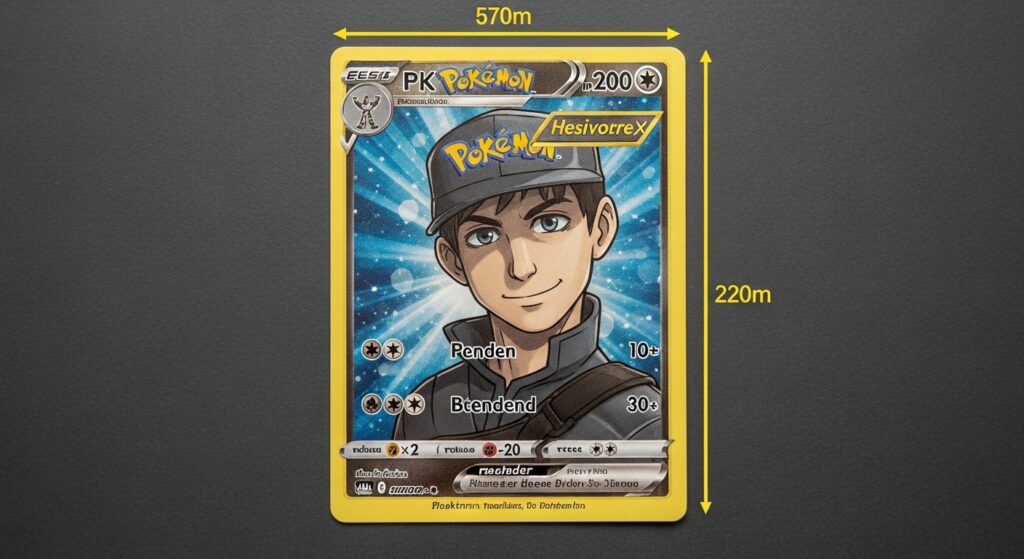
The Standard Pokémon card size is one of those facts people think they know until you ask them to say it out loud. Then there’s a pause, a squint, a vague hand gesture in the air.
Officially, a standard card measures 2.5 × 3.5 inches, or if you’re feeling metric and serious about it, 63.5 × 88.9 mm. That’s the same footprint used across most Trading cards in the Western world, and yes, that includes Magic: The Gathering.
Thickness matters too, even though nobody talks about it at parties unless it’s a very specific party. A genuine Pokémon card averages 0.012 inches thickness, roughly 0.305 mm thickness, which balances durability with shuffle-ability. Any thicker and decks feel clumsy. Any thinner and they feel like napkins with dreams.
There’s also the Aspect ratio 5:7, which sounds boring until you realize it’s why the artwork never feels cramped. The Corner radius ~0.125 inches / ~3.18 mm prevents edge fraying and makes shuffling feel smooth, almost polite.
A single card weighs about Card weight: 1.78 grams, which is light enough to forget, heavy enough to trust. These tiny decisions add up, quietly shaping every match, trade, and binder flip.
Why Pokémon Card Size Matters More Than You Think
The Pokémon card size isn’t just about fitting into your pocket or backpack. It’s about consistency. When you sit down at a tournament, maybe your first, hands a little shaky, you know every deck on every table obeys the same physical rules. Same dimensions. Same feel. Same shuffle sound, that soft cardboard whisper.
This standardization made global play possible. From local meetups to international Tournaments, the cards behave the same. That reliability is part of why the Pokémon community grew into a full-blown Cultural
phenomenon, moving over 34 billion cards sold since the 1996 (Pokémon TCG debut). Cards that feel fair invite trust. Trust invites obsession. Obsession invites binders, and binders invite more binders.
A longtime collector once told me, “If the cards were even a little bigger, kids wouldn’t trade as much.” He might be right. Small enough to stack, big enough to show off art, the size is social engineering in disguise.
Pokémon Card Size in Gameplay & Card Types
Every category within the game respects the same physical limits, even when their roles feel wildly different. Basic Pokémon, Evolution Pokémon, and all flavors of Trainer cards share identical dimensions. Whether it’s Item cards, Supporter cards, or Stadium cards, no card gets special treatment in size, only in power.
The same goes for Energy cards and Special Energy cards, even though they often get handled more roughly. You tap them, stack them, toss them aside mid-battle when things get dramatic. The uniform Pokémon card dimensions make deck building intuitive. You can sleeve a deck without thinking, which is exactly how good design hides itself.
Even Pokémon types like Fire, Water, Grass, Electric, and Psychic don’t influence size, only color and vibe. That consistency keeps the game readable. Your brain focuses on strategy, not logistics. That’s a kindness the game does for you, quietly.
Oversized Pokémon Cards and Why They Exist at All
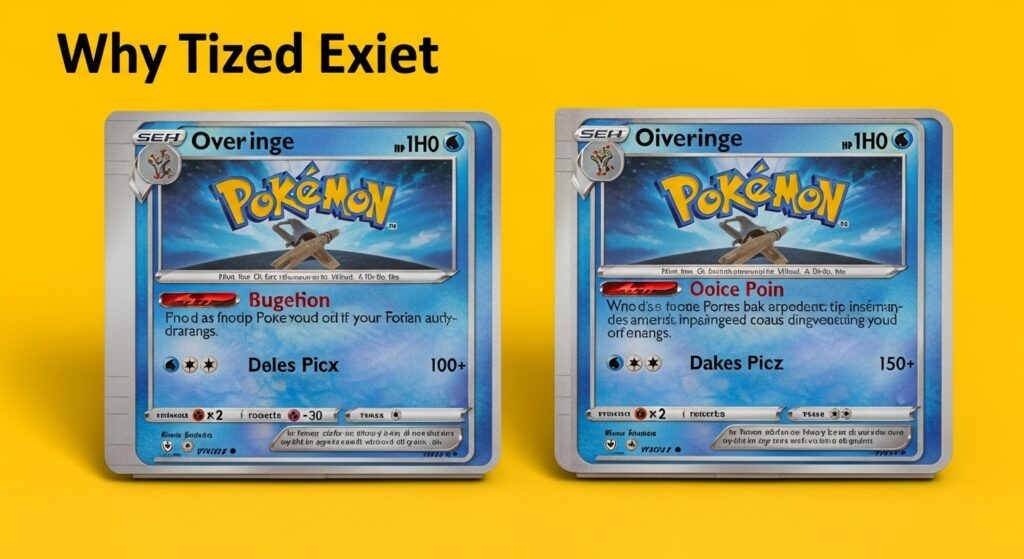
Then there are the rebels. The glorious weirdos. Oversized Pokémon cards exist mostly to celebrate moments, characters, or collections. These typically measure Oversized card size: 5 × 7 inches, exactly double the standard card in both directions.
You’ll often find them in a Special Collection Box or tucked into an Elite Trainer Box (ETB) as a bonus that makes you smile before you even know why.
They’re not tournament-legal, obviously. They’re wall art, conversation starters, nostalgia bricks. Oversized versions of iconic cards like Charizard (Holographic Charizard) feel ceremonial, like the card is saying, “Yes, I know who I am.”
These cards aren’t meant to shuffle. They’re meant to be admired, maybe framed, maybe awkwardly stored because you didn’t plan ahead.
Pokémon Card Size vs Other Trading Card Games
Comparisons are inevitable, and honestly kind of fun. Pokémon vs Magic card size is a non-issue because they’re identical in footprint. Both follow the Standard trading card size, making sleeves and binders happily interchangeable.
Pokémon vs Yu-Gi-Oh card size, though, is where things get spicy. Yu-Gi-Oh! cards are smaller, more compact, almost nervous. Pokémon cards feel calmer by comparison, more spacious. KeyForge follows the standard size as well, reinforcing that Pokémon didn’t just pick these dimensions randomly; they aligned with an ecosystem.
This shared sizing helps collectors who bounce between games. One binder, many worlds. That’s efficiency masquerading as generosity.
Pokémon Card Sleeves Size & Protection Choices
Protection starts with fit. The ideal Sleeve size: 2.64 × 3.58 inches / 67 × 91 mm gives just enough breathing room without sliding around like socks on ice. Penny sleeves are the budget-friendly entry point, usually made from Polyethylene sleeves, flexible and forgiving.
If you’re serious, Premium sleeves made from Polypropylene sleeves offer better clarity and shuffle feel. Pair those with Toploaders, typically Toploader size: 3 × 4 inches / 76 × 101 mm, and you’ve got museum-level protection. Add UV protection and Moisture protection, and suddenly your cards feel safer than most houseplants.
Binder pockets, Card binders, and Pocket pages all rely on the standard size being standard. One deviation and the whole system collapses like a bad Jenga move.
Pokémon Card Thickness, Weight & Authenticity
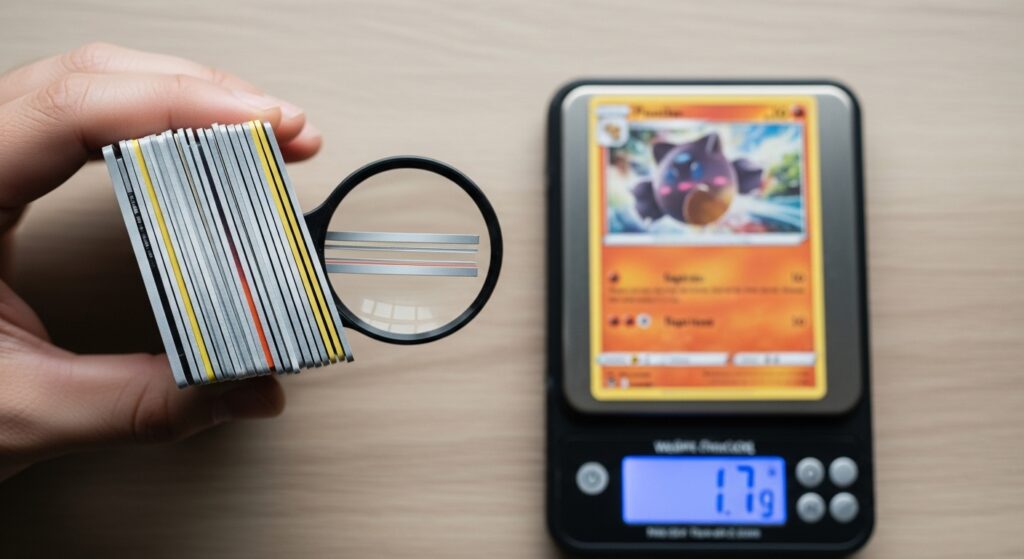
Here’s where the rabbit hole deepens. Pokémon card thickness and Pokémon card weight are crucial for Counterfeit detection. Fake cards often feel off before they look off. They might be lighter, heavier, too stiff, or weirdly floppy.
Collectors sometimes use Card weight verification as part of Card authenticity checks, especially for high-value pulls. Real cards have consistent Card density and Cardstock quality. Fakes struggle to mimic all variables at once. If a card feels wrong, it probably is, even if the print looks decent.
This matters deeply in Card auctions and Trading card investment spaces, where a single millimeter or gram can mean the difference between a grail and a regret.
Collecting, Market Value & Investment Implications
The physical size of Pokémon cards influences how they age. Smaller cards bend easier, larger cards crease easier. The chosen dimensions hit a sweet spot, contributing to the longevity of Rare Pokémon cards. That’s part of why Charizard card price discussions never seem to end.
Serious Card collecting isn’t just nostalgia, it’s logistics. Storage costs, display options, grading slabs, all rely on predictable measurements. Investors care about Pokémon card measurements because consistency reduces risk. When you’re thinking long-term, boring details become very exciting, very fast.
One parent I spoke to, who now collects with their kid, said, “I like that the cards I saved still fit today’s binders.” That continuity is priceless, emotionally and financially.
A Short History of Pokémon Card Size Decisions
When the Base Set launched in 1996, the choice to follow existing trading card dimensions wasn’t lazy, it was strategic. It allowed Pokémon to plug directly into an already-established Trading card market, leveraging existing manufacturing, accessories, and player habits.
This decision helped Pokémon scale fast, globally. Local meetups in Japan, schoolyard trades in the US, casual games in Europe, all used the same physical language. The cards spoke size fluently, everywhere.
That’s how you build a universe without borders, one rectangle at a time.
Practical Tips: Making Pokémon Card Size Work for You
If you’re new, start simple. Buy sleeves that explicitly mention Best sleeves for Pokémon cards. Store valuable pulls immediately. Don’t stack raw cards loose unless you enjoy regret as a hobby.
If you’re experienced, audit your storage once a year. Check for humidity, warping, sleeve yellowing. Upgrade binders if needed. Small habits protect big memories.
And if you’re a parent introducing a kid to the game, teach them why size matters. It’s a sneaky way to teach care, respect, and a little physics, without sounding like a lecture.
Read this Blog: https://marketmetl.com/what-size-is-a-pokemon-card/
Frequently Asked Questions
What is the standard Pokémon card size?
The standard Pokémon card size is 2.5 × 3.5 inches (63.5 × 88.9 mm), the same as most trading cards.
How thick is a Pokémon card?
A typical Pokémon card has a thickness of 0.012 inches (0.305 mm) for durability and shuffle-ability.
What are oversized Pokémon cards?
Oversized cards measure 5 × 7 inches and are usually for promotions or collector sets, not for official play.
What sleeve size fits Pokémon cards best?
Standard sleeves should be 2.64 × 3.58 inches (67 × 91 mm) to protect the card without being too tight.
How much does a Pokémon card weigh?
A regular Pokémon card weighs around 1.78 grams, giving it a consistent feel for gameplay and collection.
Closing Thoughts: Small Cards, Enormous Meaning
The beauty of Pokémon cards is that they’re humble. They don’t demand space. They don’t shout. They just sit there, perfectly sized, waiting to matter to someone. Understanding Pokémon card size isn’t about memorizing numbers, it’s about appreciating the invisible architecture behind decades of joy.
If you’ve got a favorite memory tied to a card, or a storage tip that saved your collection, share it. The community grows on stories just as much as stats. And somewhere, a slightly bent card is still doing its job, perfectly, at 2.5 × 3.5 inches of quiet magic.