I remember the first time I held a Pokémon card and thought, huh, this is thicker than it looks but thinner than it feels. That sentence barely makes sense, but that’s how memory works sometimes.
Cards are emotional objects, weirdly. They sit between paper and promise, between a kid’s pocket and a grown collector’s glass cabinet.
When people ask is Pokémon card stock A35 thick standard, they’re really asking something softer underneath: can I trust this card, can I protect it, can I believe it’s real.
That’s what this article is about, not just millimeters and grams, but the quiet reassurance of knowing what’s in your hands is what it claims to be.
The Pokémon Trading Card Game (TCG) has been around since 1996 (Pokémon TCG debut), which feels wild if you stop and breathe on that fact for a sec.
Nearly three decades of trading cards, shuffled, bent, sleeved, loved too hard, and still somehow surviving. Thickness, size, weight, these things matter because they’re the backbone of trust in a global collecting community that spans kitchens, tournaments halls, and auctions that make your palms sweat.
| Feature | Standard Pokémon Card |
|---|---|
| Card size | 2.5 × 3.5 inches (63.5 × 88.9 mm) |
| Aspect ratio | 5:7 |
| Card thickness | ~0.012 inches (0.305 mm) |
| Stock reference | Commonly referred to as A35-like, not officially named |
| Card weight | 1.78 grams |
| Corner radius | 0.125 inch (3.18 mm) |
| Material | Layered cardstock with inner core |
| Sleeve size | Standard **CG / TCG sleeves |
| Tournament legal | Yes |
| Used since | 1996 Pokémon TCG debut |
Understanding Pokémon Card Stock Without Falling Asleep
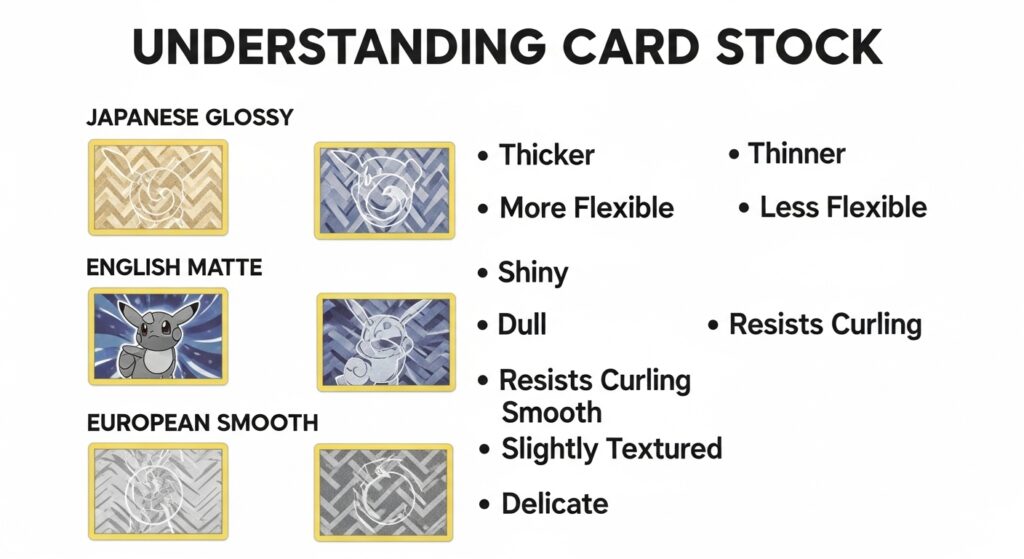
Card stock sounds boring, like printer paper talk, but Pokémon cardstock is a specific creature. It’s engineered for durability, flexibility, and consistent density, so gameplay doesn’t turn into chaos. A card that’s too thick won’t shuffle right, too thin and it feels like a lie.
Official Pokémon cards are printed on layered cardstock with a blue or black core, depending on era, which helps with counterfeit detection. That inner layer is why light doesn’t pass through clean, and why fakes often feel papery or wrong-ish in the fingers.
The idea of “A35” thickness floats around forums and comment sections like a ghost term. In printing, A35 isn’t an official Pokémon designation, but collectors use it loosely to describe cardstock around 0.012 inches
thickness or 0.305 mm thickness, which lines up with real measurements taken from authentic cards. So when people ask is Pokémon card stock A35 thick standard, the answer is basically yes-ish, but not officially labeled that way by Pokémon.
Pokémon Card Dimensions, The Numbers That Actually Matter
Let’s ground this with measurements, because vibes are nice but math keeps us honest.
Official Pokémon card dimensions are:
- 2.5 inches × 3.5 inches
- 63.5 mm × 88.9 mm
- 5:7 aspect ratio
- 0.125 inch corner radius
- 3.18 mm corner radius
That size is what makes card sleeve sizing, card binder compatibility, and gameplay consistency possible across the world. It’s also why Magic: The Gathering, Yu-Gi-Oh!, KeyForge, and even many sports cards feel familiar in hand, even if the art worlds are galaxies apart.
Thickness fits into this system quietly. At around 0.012 inches thickness, Pokémon cards strike that balance where shuffling ease exists without cards feeling flimsy. That’s the standard, even if nobody at Pokémon HQ calls it A35 out loud.
Is Pokémon Card Stock A35 Thick Standard in Tournament Play?
Short answer, yeah, practically speaking. Long answer, it’s more about tolerance than labels. In tournament play, judges don’t carry calipers. They care about marked cards, warping, or inconsistencies that could affect card handling or fairness.
Cards printed thinner or thicker than the norm stand out during shuffling, which is why global standardization exists in the first place. Since the Pokémon card debut year, the company has kept dimensions and thickness tight so decks feel the same in Tokyo, Toronto, or a folding table in someone’s basement.
If Pokémon suddenly changed stock thickness, it would ripple into card sleeve size, binder pockets, and deck boxes worldwide. That’s not a mess anyone wants, trust me.
Pokémon Card Weight, Because Yes That Matters Too
Weight is the sneaky metric people ignore until it’s dramatic. A single Pokémon card weighs about 1.78 grams (card weight). That seems trivial until you’re weighing booster packs like a raccoon with a digital scale.
Here’s where numbers get spicy:
- 22–24 g (standard booster pack)
- 24–25 g (heavy booster pack)
- 280–300 g (Elite Trainer Box)
- 190–210 g (Theme/Battle Deck)
- 500–800 g (Special Collection Box)
Weight differences historically mattered for finding holographic cards, especially early sets. Modern printing has mostly closed that loophole, but weight is still part of card authenticity conversations. Thickness and weight go hand in hand, like awkward cousins.
Pokémon Card Types and Why Thickness Feels the Same Anyway
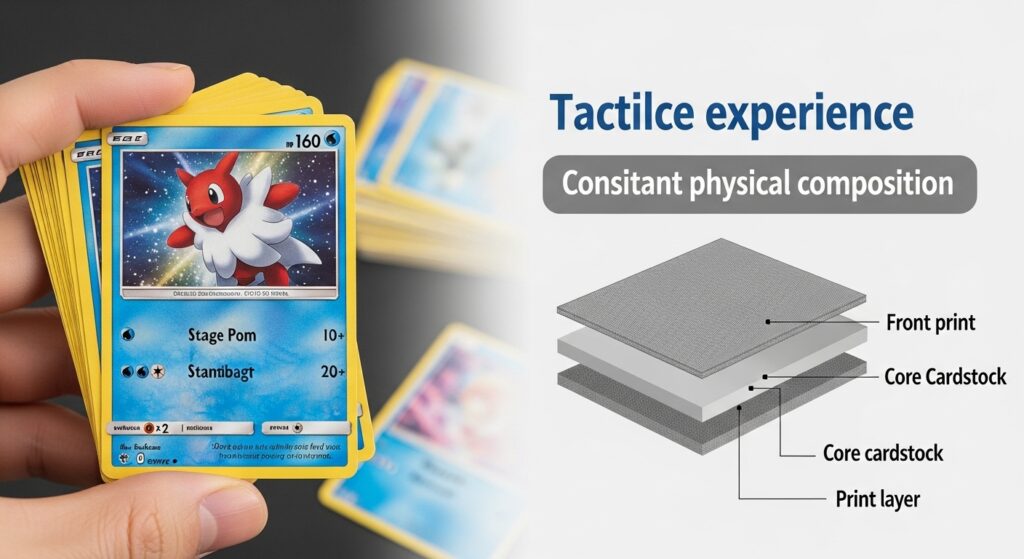
All Card Categories share the same stock feel:
Pokémon Card Subtypes include:
- Basic Pokémon
- Evolution Pokémon
Trainer Card Subtypes include:
- Item cards
- Supporter cards
- Stadium cards
And then there’s Energy cards, from Fire Energy to Psychic Energy, including Special Energy. Despite different inks, foil layers, and finishes, the base Pokémon cardstock thickness stays consistent. Foil adds texture, not bulk, which surprises people the first time they micrometer-test it.
Even iconic pulls like Base Set Charizard follow the same stock rules. The magic is in the shine, not the thickness.
Pokémon Card Protection, Because Card Stock Isn’t Immortal
No matter how perfect the stock is, cardboard remains cardboard. Pokémon card protection isn’t optional if you care about card value or investment potential.
Most collectors start with penny sleeves, usually made from polyethylene sleeves. They’re cheap, soft, and good for bulk. For decks or nicer cards, premium sleeves made from polypropylene sleeves offer better clarity and UV protection.
Then come the heavy hitters:
- Hard plastic toploaders
- Binder pockets
- Deck boxes
- Card binders
These card storage solutions protect against heat damage, UV fading, card warping, and moisture disasters that happen when basements forget they’re basements. Thickness consistency ensures cards fit all of these without awkward bending, which is honestly underrated.
Pokémon Card Sleeves, Storage, and the Joy of Fit
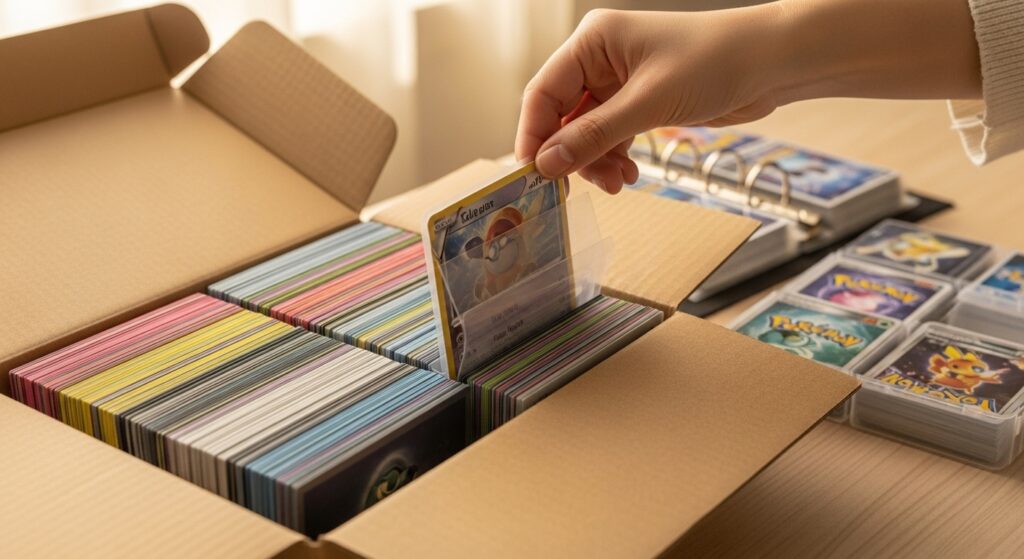
Ever slide a card into a sleeve and feel resistance that makes your stomach drop. That’s when you appreciate standardization. Pokémon card sleeves are designed around official Pokémon card size, and because thickness stays near that A35-ish range, everything fits like it should.
Card display setups rely on this too. Whether you’re framing a holographic card or storing rare Pokémon cards long-term, predictable thickness prevents pressure points. Museums care about this stuff, and collectors should too, even if they pretend not to.
Is Pokémon Card Stock A35 Thick Standard for Grading?
In card grading, thickness is a quiet checkpoint. Companies look for trimming, pressing, or stock inconsistencies that signal tampering. A card that’s noticeably thinner or thicker than expected raises eyebrows fast.
Because authentic Pokémon cards cluster around 0.305 mm thickness, graders know what normal feels like without measuring every card. That’s why fakes struggle, even good ones. Counterfeit detection often starts with a thumb and forefinger before machines get involved.
As one longtime grader once said in an interview, “Real Pokémon cards feel boringly consistent, and that’s the point.” I like that quote a lot, even if it sounds grumpy.
Oversized Pokémon Cards and Special Edition Chaos
Not everything follows the rules. Oversized Pokémon cards and special edition cards exist to break expectations. They’re thicker, thinner, glossier, sometimes bendy in a way that makes purists sigh.
But these are clearly labeled exceptions. Promotional cards might have different finishes, yet they still aim for similar cardstock density so they don’t feel cheap. Even chaos has boundaries, apparently.
The Trading Card Market and Why Standards Protect Value
The trading card market runs on trust. Buyers assume that a card described as Near Mint isn’t secretly thinner because someone sanded it. Consistent stock thickness supports auctions, card collecting, and long-term confidence.
When collectors talk about investment potential, they’re not just gambling on popularity. They’re trusting the physical object to survive decades. That’s why Pokémon sticks to standards even when printing tech evolves.
Is Pokémon Card Stock A35 Thick Standard, Really, Final Answer
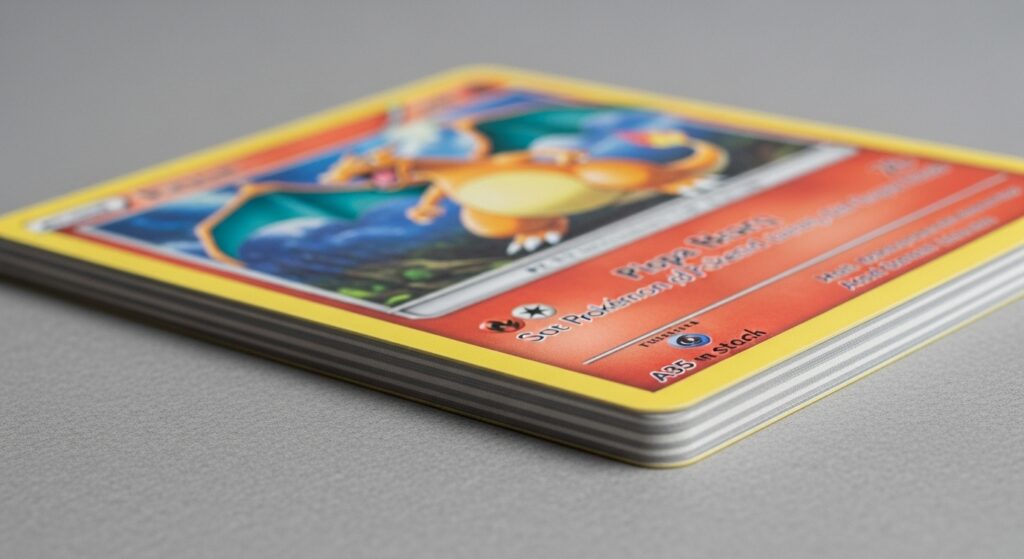
So, circling back gently. Is Pokémon card stock A35 thick standard? Not officially by name, no. But in practice, yes. Pokémon cards hover around 0.012 inches thickness, 0.305 mm thickness, weigh about 1.78 grams, and follow strict standard card size rules that make the whole ecosystem work.
The lack of an official A35 label doesn’t mean inconsistency. It means Pokémon relies on manufacturing tolerances rather than marketing terms. And honestly, that’s probably healthier.
Frequently Asked Questions
What is the standard thickness of a Pokémon card?
The standard thickness is about 0.012 inches (0.305 mm), which keeps shuffling and gameplay consistent.
Are Pokémon cards A35 thick officially?
No, A35 isn’t an official label; it’s a community term approximating standard card stock.
How much does a single Pokémon card weigh?
A single card weighs roughly 1.78 grams, depending slightly on finish or foil type.
Do all Pokémon card types have the same stock?
Yes, Basic Pokémon, Evolution, Trainer, and Energy cards share the same core cardstock thickness.
Can I use standard sleeves for all Pokémon cards?
Yes, standard TCG sleeves fit regular Pokémon cards perfectly due to their consistent size and thickness.
Read this Blog: https://marketmetl.com/pokemon-card/
How to Personalize Your Pokémon Card Care Ritual
If you’re new, or even if you’re not, here’s how to make this knowledge practical without overthinking it.
Choose sleeves that fit snug but not tight, test one card first, always. Store valuable cards upright in binders or toploaders, never loose in stacks. Avoid sunlight like it’s a villain arc. And trust your fingers, if a card feels wrong, it often is.
I’d love to hear how you store yours, or if you’ve ever noticed a thickness difference that made you suspicious. Share your experiences, your weird rituals, your first pull stories. Cards are paper, yes, but they’re also memory containers, and that part doesn’t have a measurement.